
Bathroom Tiles
Aurees Tiles stocks the bathroom tiles Adelaide renovators need for floors, walls, showers and niches, with most of the range in stock at our Cavan showroom. The real job isn’t choosing one tile. It’s coordinating a floor, walls, a shower and usually a feature or niche so they suit each other, meet wet-area requirements and cope with daily water, steam and cleaning. That’s why we offer a free tile selection service. Bring your plans and finishes, and our team will help you plan the whole bathroom in one visit, with factory-direct pricing, samples to take home and a 10-year warranty on every tile.
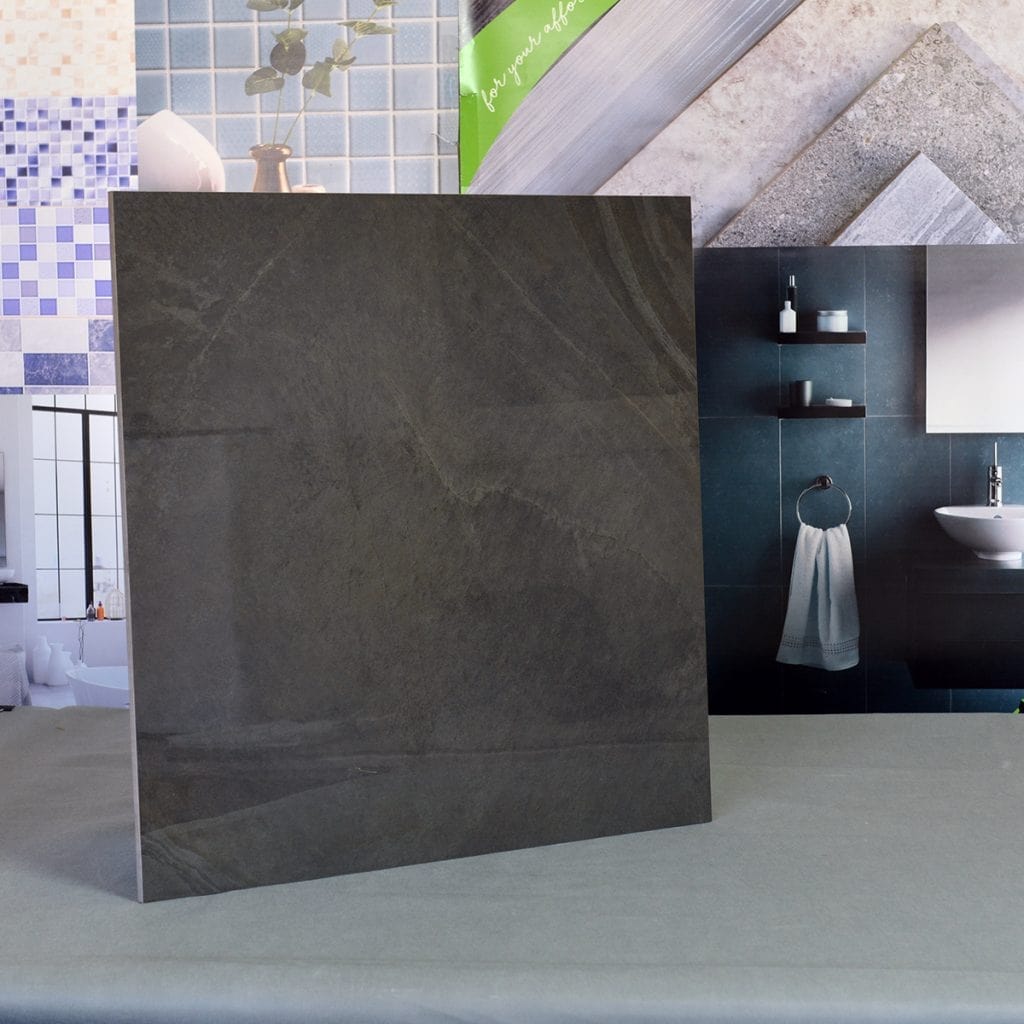
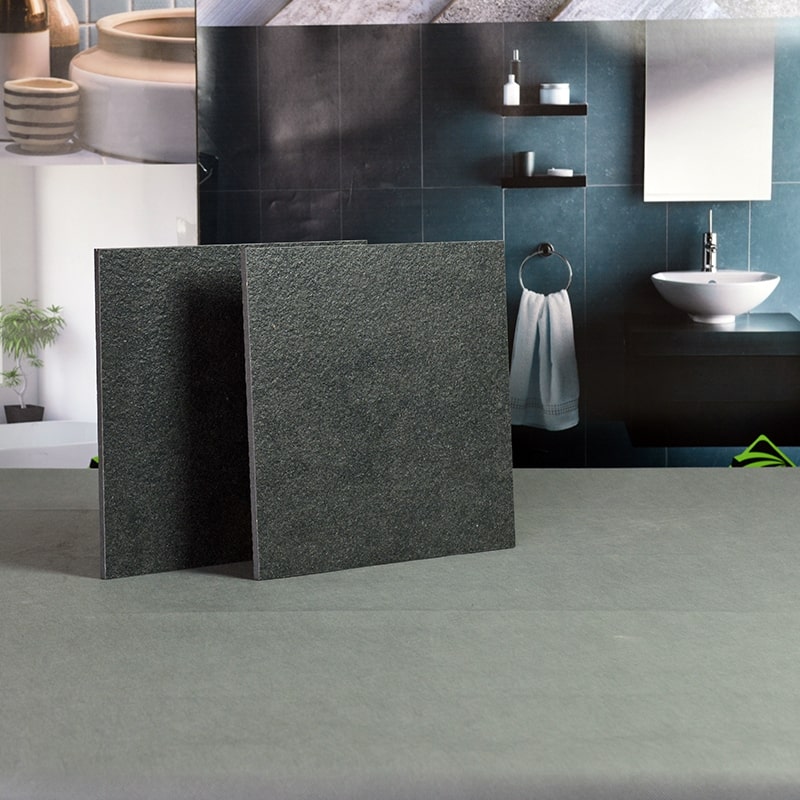
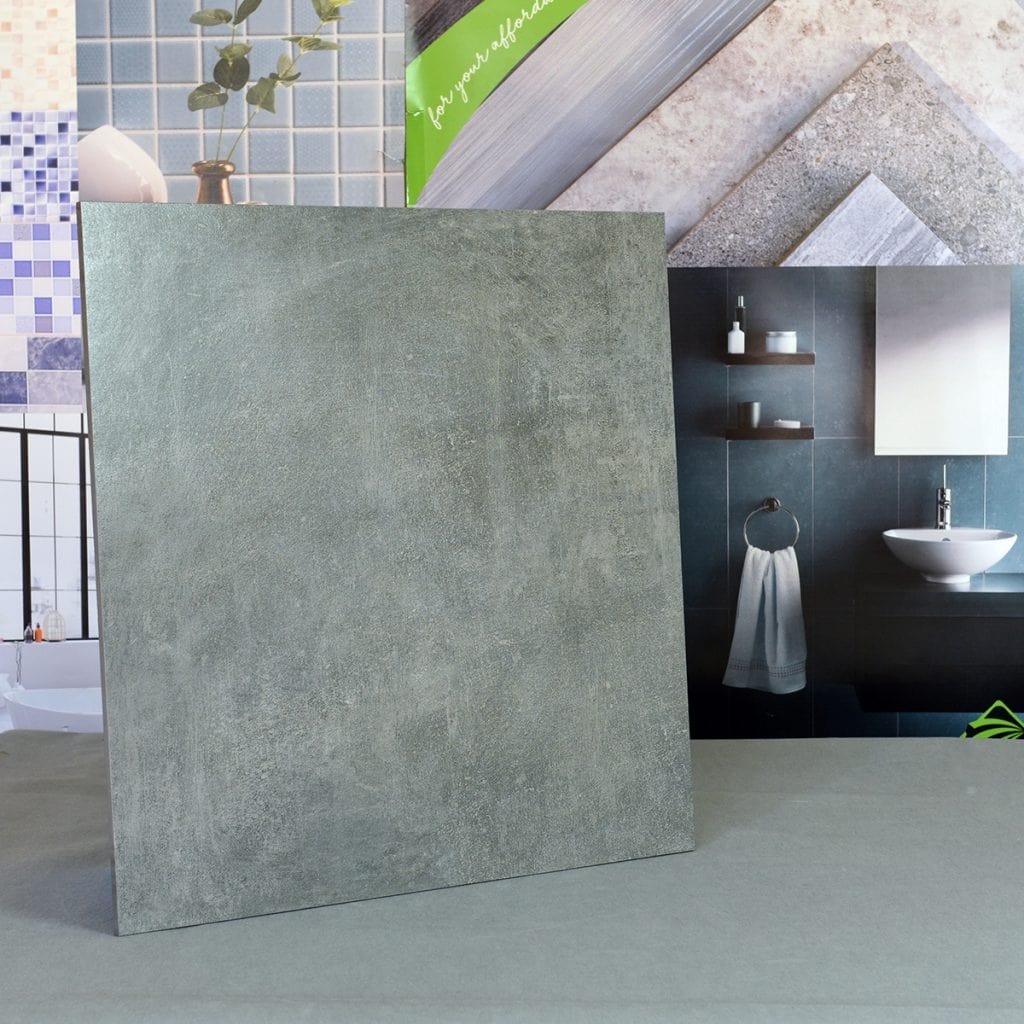
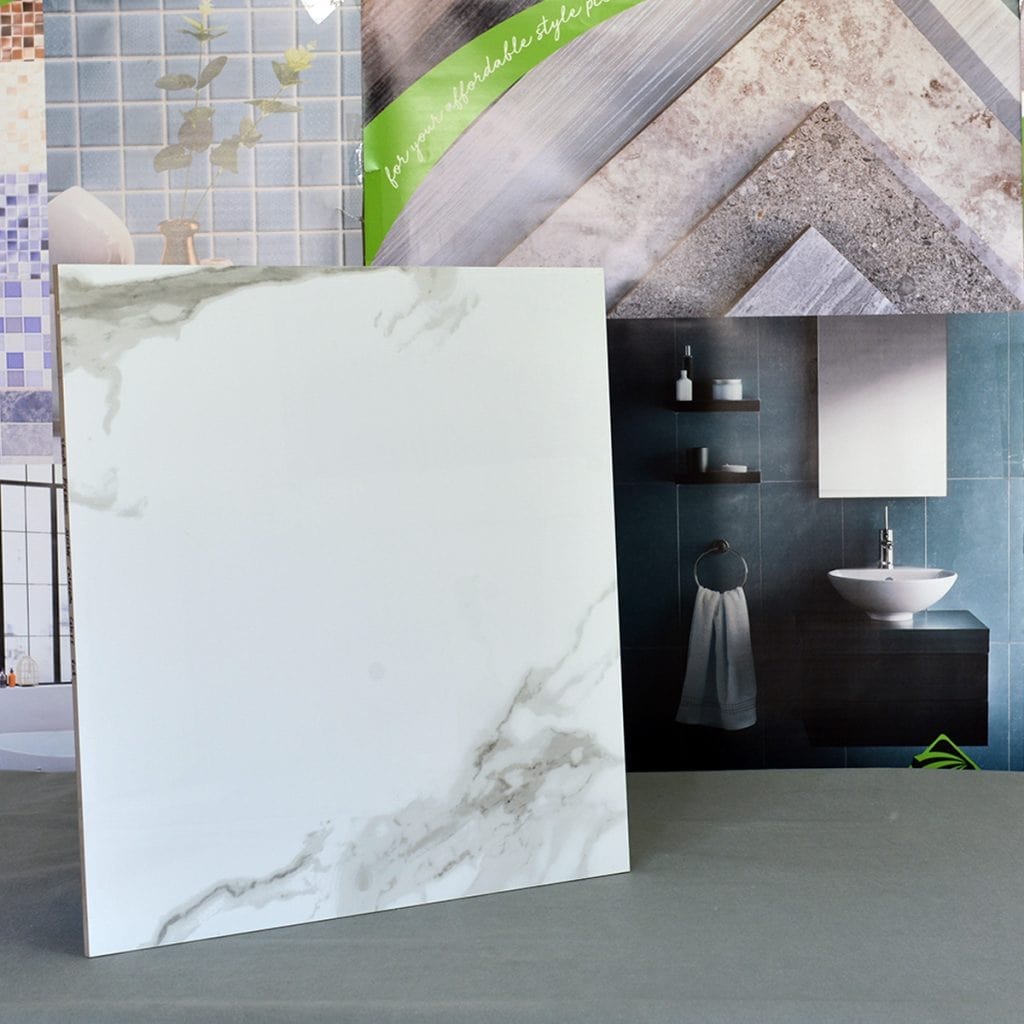
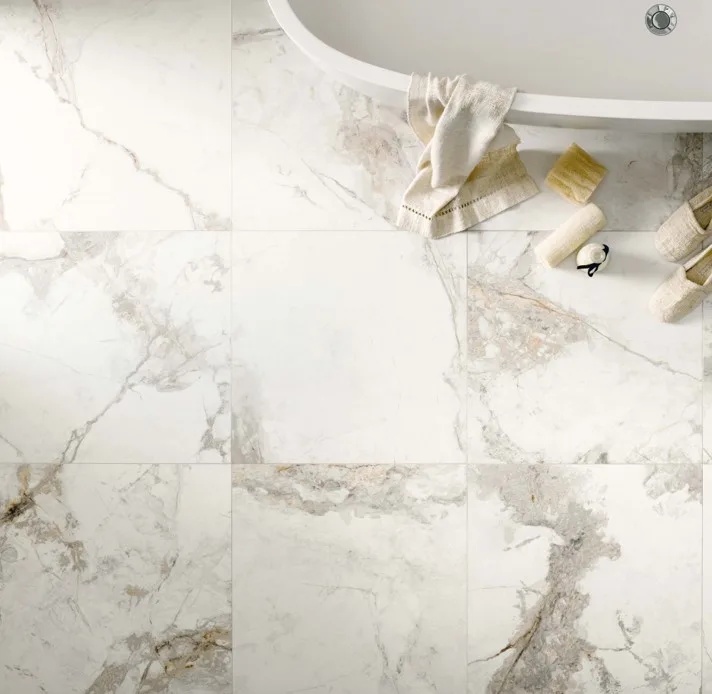
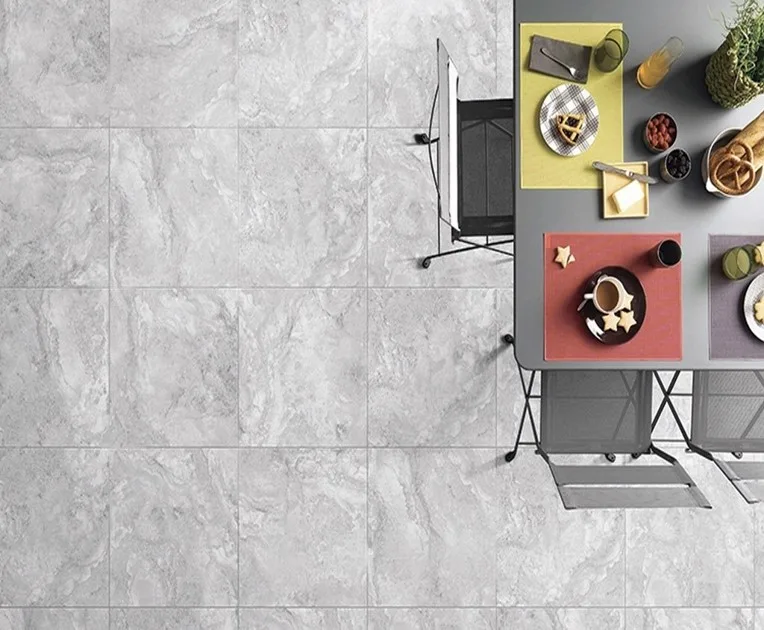
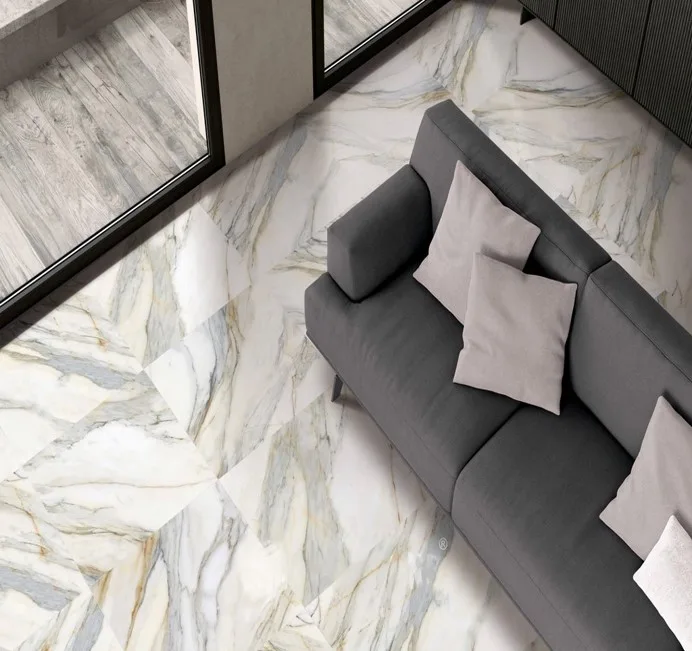
Bathroom floor tiles
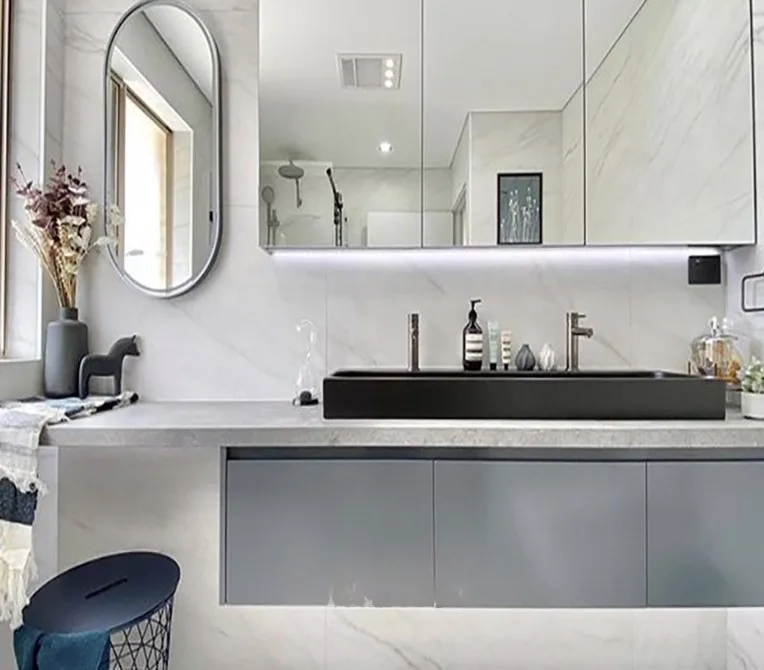


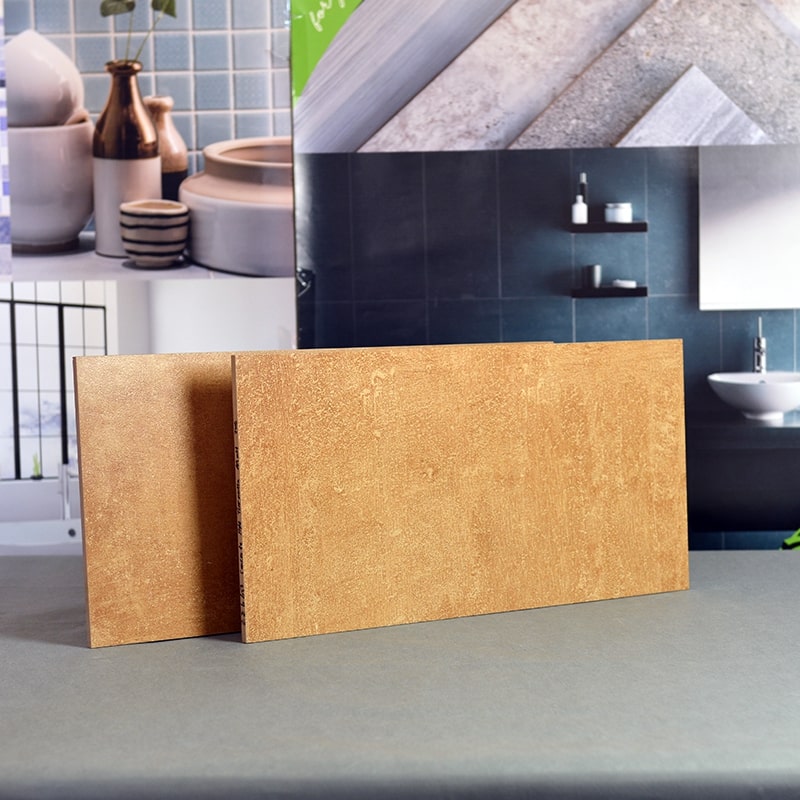
Bathroom wall tiles
Small bathroom tile ideas
A small bathroom can feel noticeably bigger with the right tile choices. These are the small bathroom tile ideas we suggest most often at the showroom. Most cost nothing extra; they’re simply about format, colour and layout.
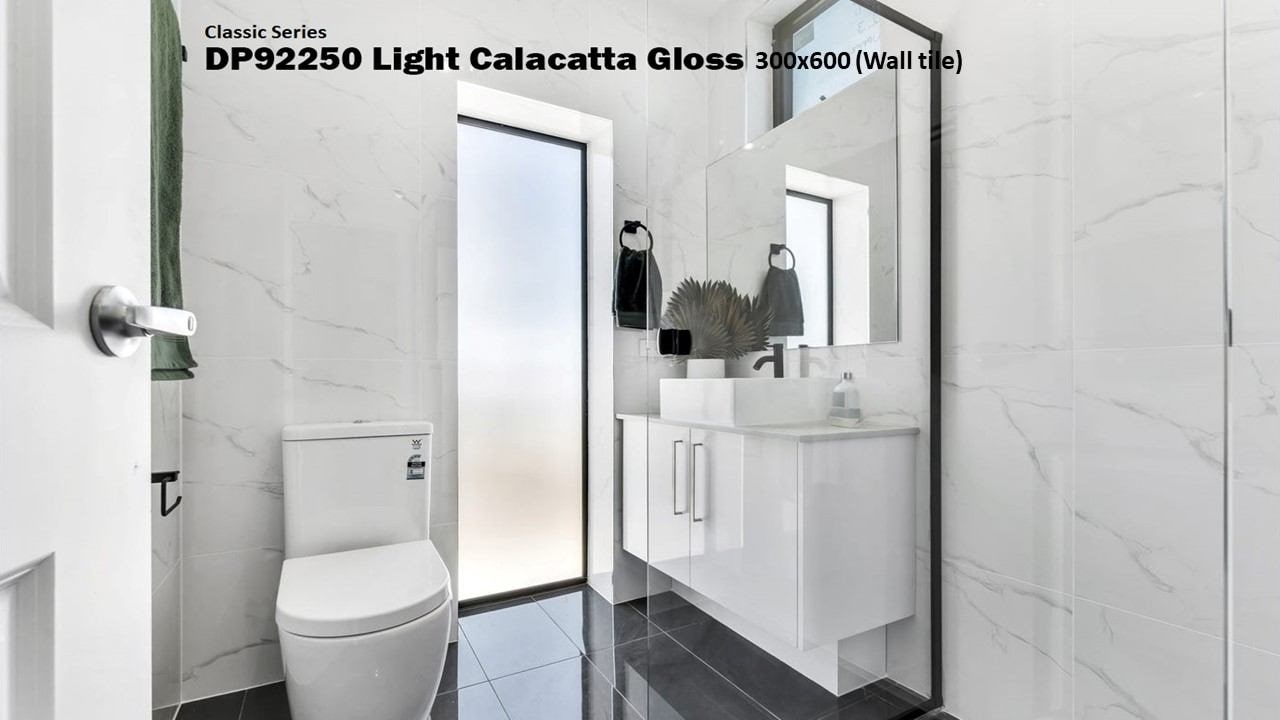
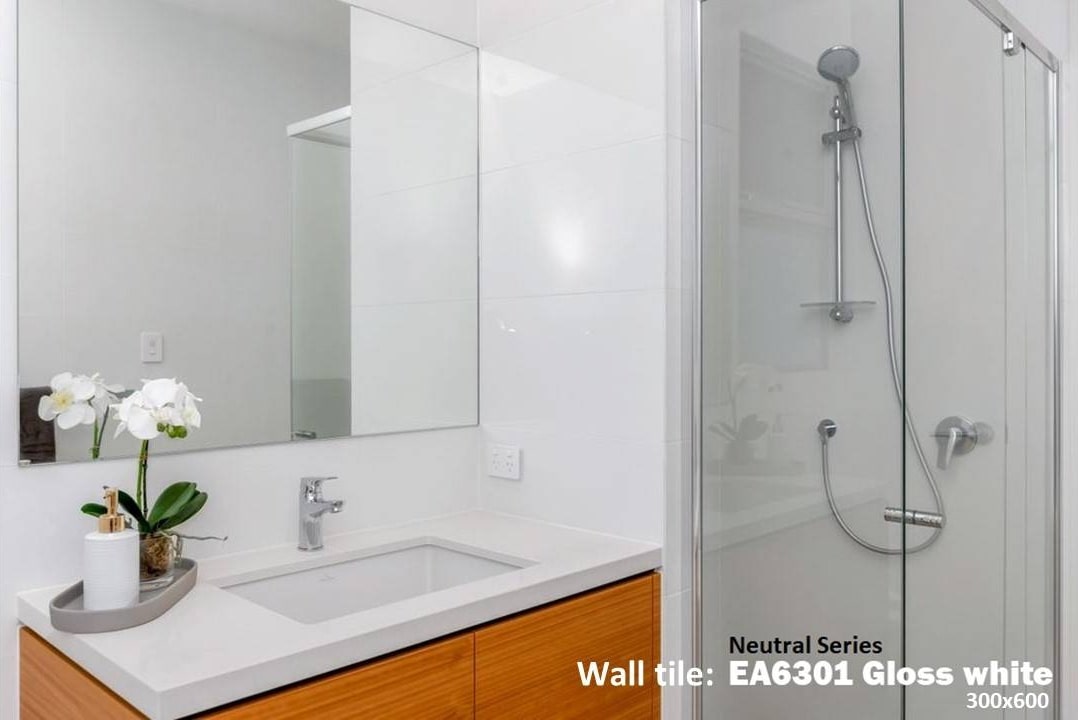
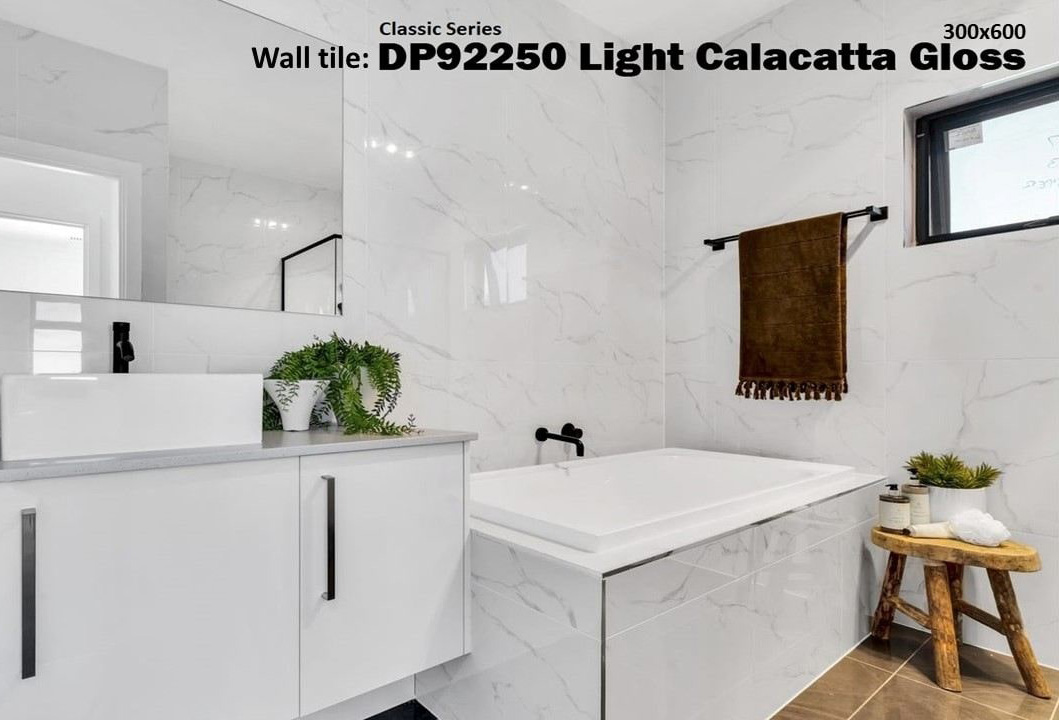
Fewer grout lines make the floor read as one continuous surface. 600×600 or 1200×600 works well on the main floor, with the shower handled as above.
Laying rectangular wall tiles vertically in straight stacks draws the eye up and makes the ceiling feel higher.
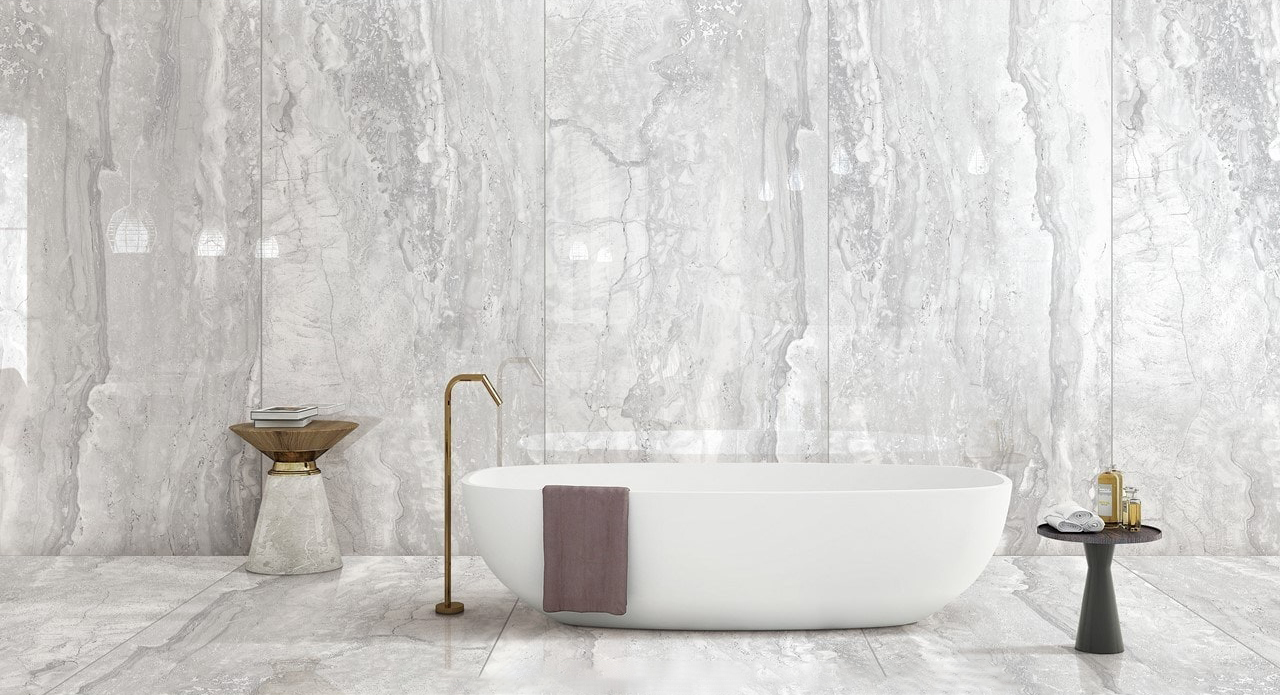
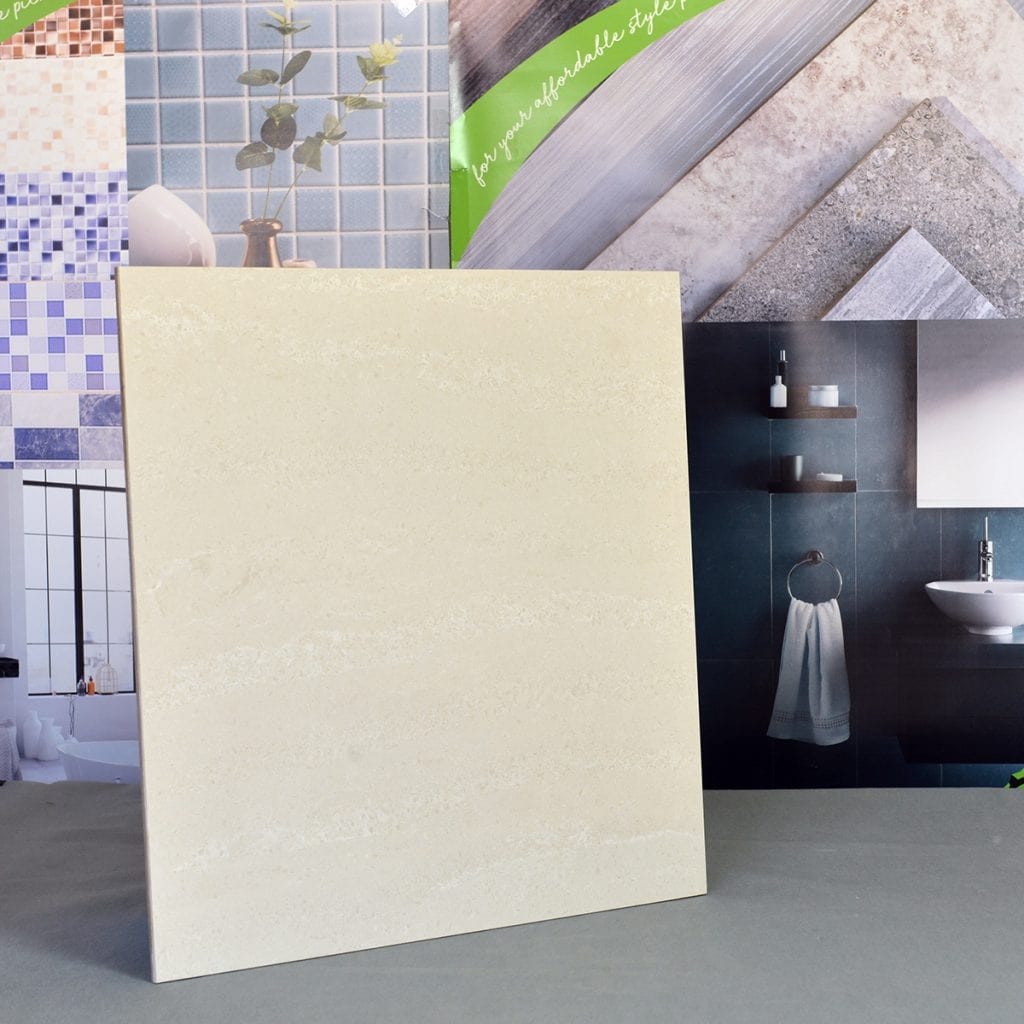
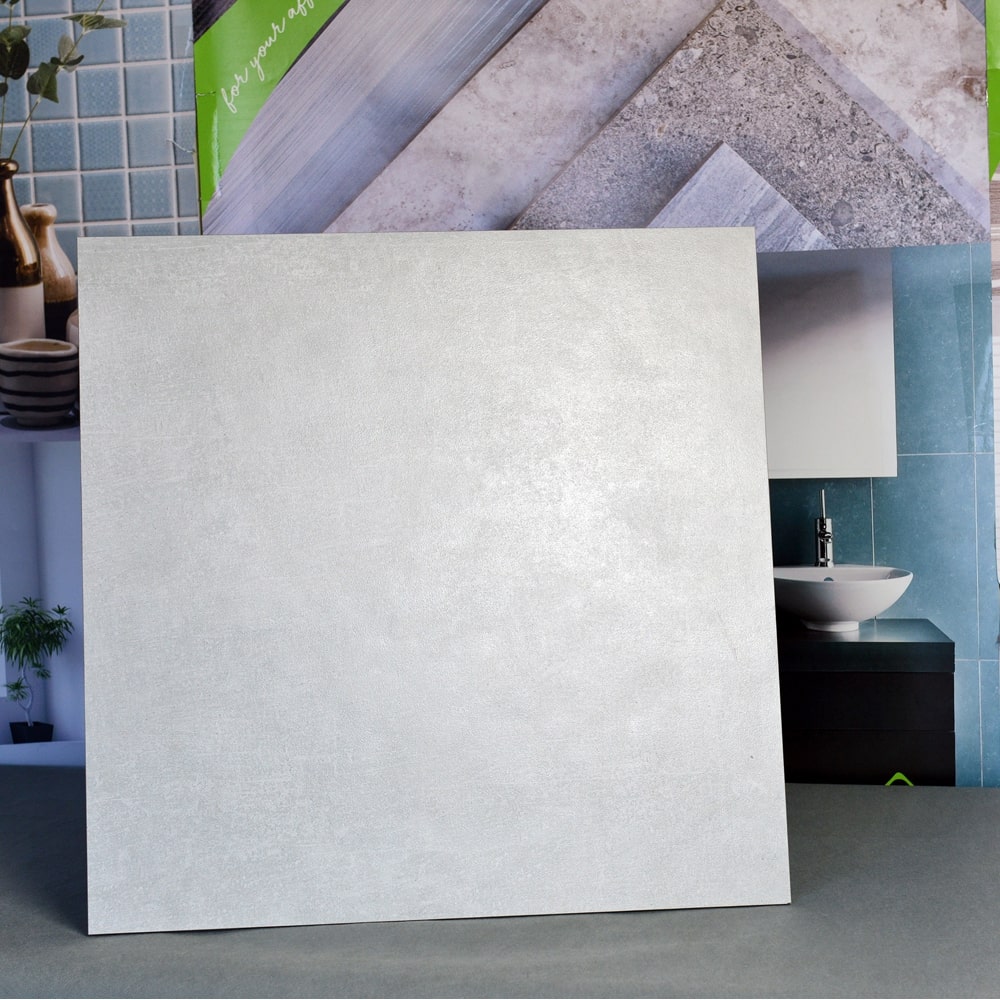
White, soft grey and warm beige reflect light and keep the room feeling open.
The same or a similar colour on both blurs where the floor ends and the walls begin, so the room reads as larger.
Running the floor tile through the shower with a frameless screen removes the visual break of a hob or step.
Keep bold pattern to the niche or one wall so the space stays calm. For light, space-making colours, start with our white tiles, grey tiles and beige tiles. Many come in matching floor and wall formats, which makes a tone-on-tone small bathroom easy to plan without hunting for matching ranges.
For most bathroom floor tiles Adelaide homes need, low-absorption porcelain is our default recommendation. Porcelain absorbs 0.5% water or less, so it stays stable around the shower, resists staining and doesn’t need sealing when it’s glazed. Ceramic suits walls; porcelain is the safer choice underfoot.
Slip resistance matters more in a bathroom than anywhere else inside the home. We usually recommend R10 for the main floor, which grips wet feet without being hard to clean, and R11 or a mosaic for the shower base, where water sits on the surface. Imperial Alabastrino, for example, comes in a matt R10 finish for the main floor and a grip R11 finish for the shower, in the same look. For the full R-rating table and how the test works, see our guide to floor tiles Adelaide slip ratings.
Shower floors are special. The floor has to fall away from the waste so that water runs off. Smaller tiles or mosaics follow that slope far better than large tiles which can leave low spots where water can sit. More grout joints equals more grip. If you want a large tile throughout, ask your tiler about a linear (strip) drain, which will allow the shower floor to slope in one direction.
Finally, think comfort. Porcelain is cool underfoot, which is good in an Adelaide summer and not so good on a July morning. Warm colours such as beige or timber-look are friendlier than cool whites and greys, and if you want a truly warm floor, porcelain works well with underfloor heating.
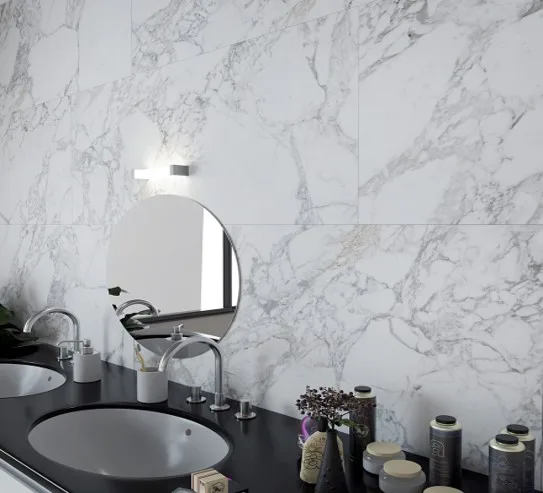
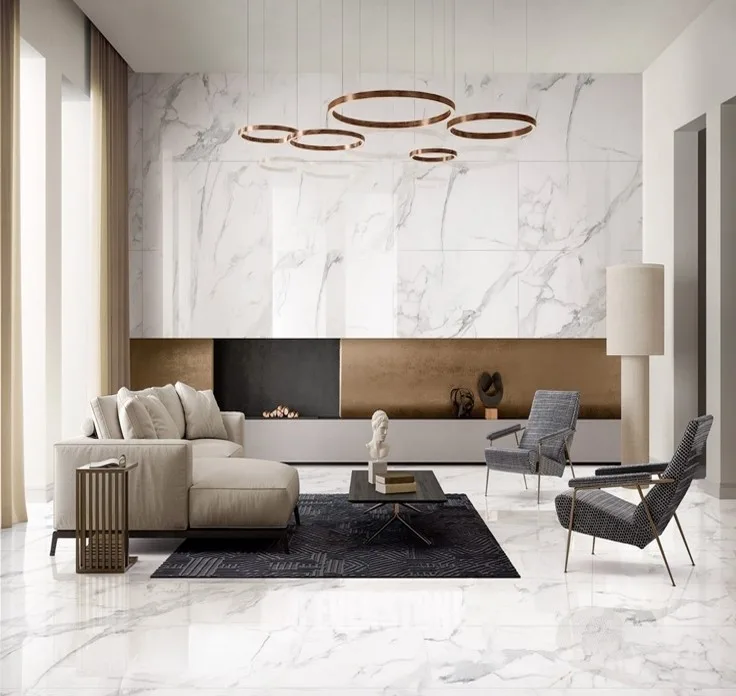
Most bathroom wall tiles Adelaide renovators choose start with one question: how high do you tile? There are three common approaches.
- Full-height: floor to ceiling on every wall. It looks the most finished, is the easiest to wipe down and suits small bathrooms, but it uses the most tile.
- Half-height: tiles to around 1.2 metres, with painted walls above, often finished with a capping tile. It’s a classic, budget-friendly look for well-ventilated bathrooms.
- Shower-only: tiles in the shower and behind the vanity and bath, with paint elsewhere. It uses the least tile, but the painted walls need a moisture-resistant finish.
Format matters as much as height. Large format wall tiles such as 600×1200 mean fewer grout lines, and fewer grout lines mean less scrubbing and fewer places for mould to take hold. Atlas Stone White Gloss, for instance, comes in 300×600, 600×600 and 600×1200. Classic 300×600 formats like White Wall Matt remain popular because they’re easy to handle and cut neatly around fittings.
Colour and finish change how the room feels. In a small or low-light bathroom, light colours and a gloss finish bounce light around, making the space feel brighter and larger. Matt finishes hide water spots and suit bigger, well-lit rooms. A white or soft grey wall with a slightly warmer floor is a safe, timeless combination that also suits resale. For every format, layout and laying pattern we stock, see our wall tiles Adelaide page.
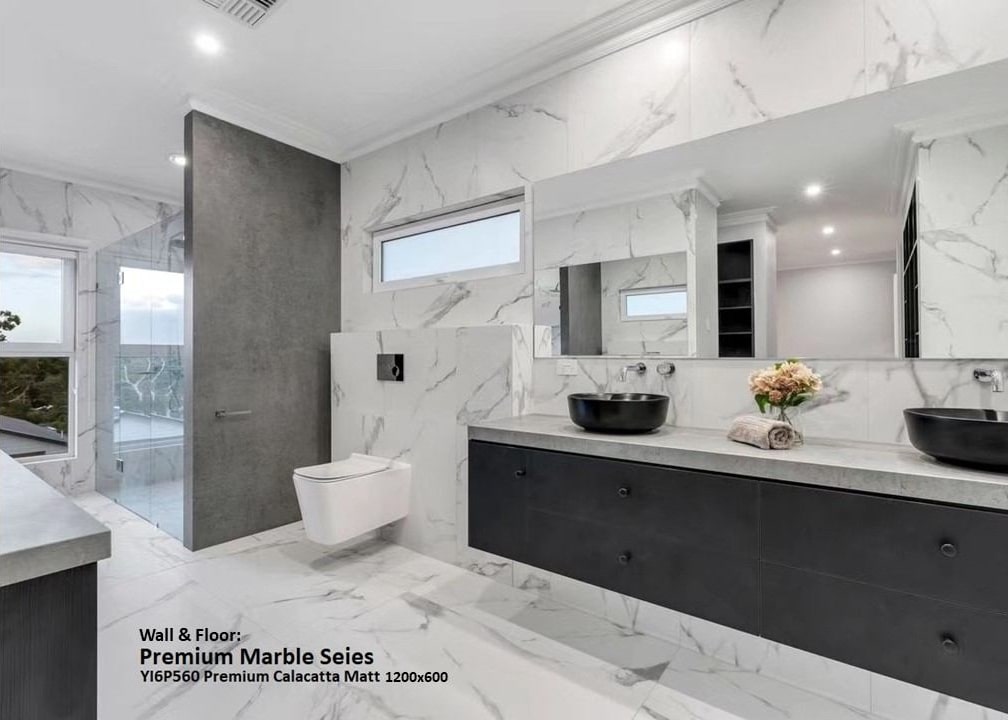
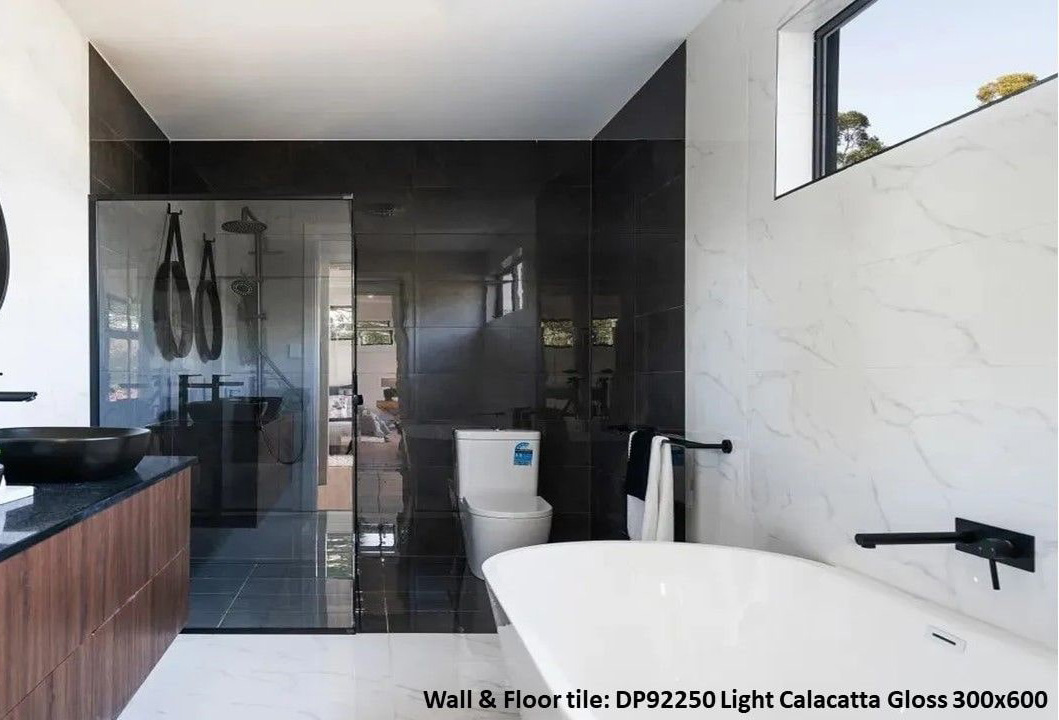
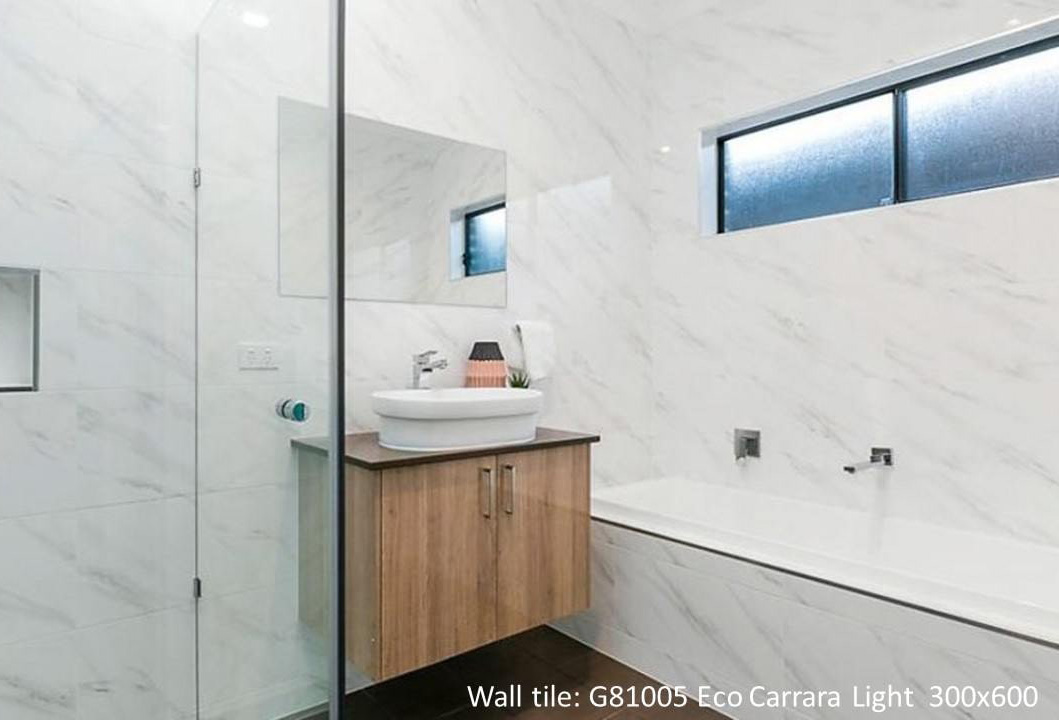
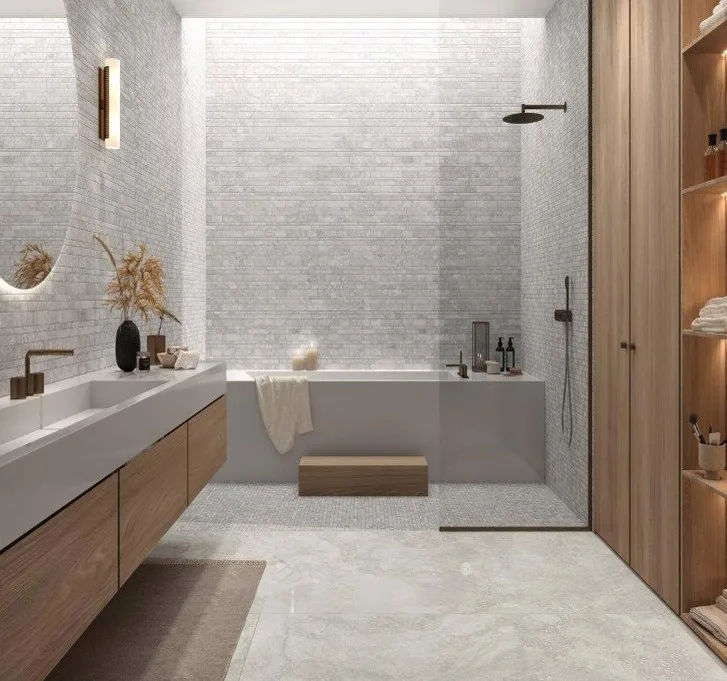
The shower is where most of a bathroom’s personality goes, and the niche is the obvious place to start. It’s small enough to take a statement tile without overwhelming the room. Mosaics suit niches well because they wrap neatly around corners and edges, while patterned tiles turn a practical shelf into a focal point. Browse our mosaic tiles and marble look tiles for niche and feature-wall ideas.
The big decision is the shower floor. The tile continues from the main floor straight into the shower (in a coordinating grip finish), giving a seamless look that makes the room feel bigger, especially with a frameless screen. A mosaic or contrasting tile creates a distinct zone for the shower and provides grip where it’s most needed. Both work, depends on the look you want.
A feature wall behind the vanity or at the end of the shower works best when it picks up one colour from the floor or walls. Keep the other surfaces calm and let one wall do the talking. Ask us to lay your shower tiles Adelaide options side by side in the showroom.
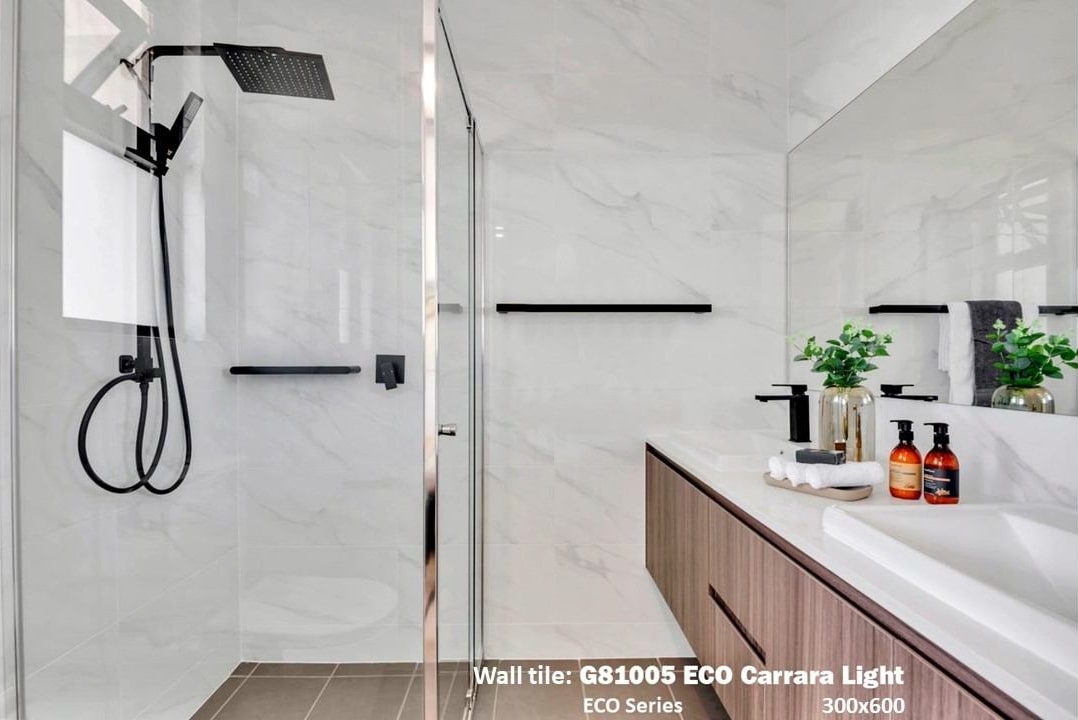
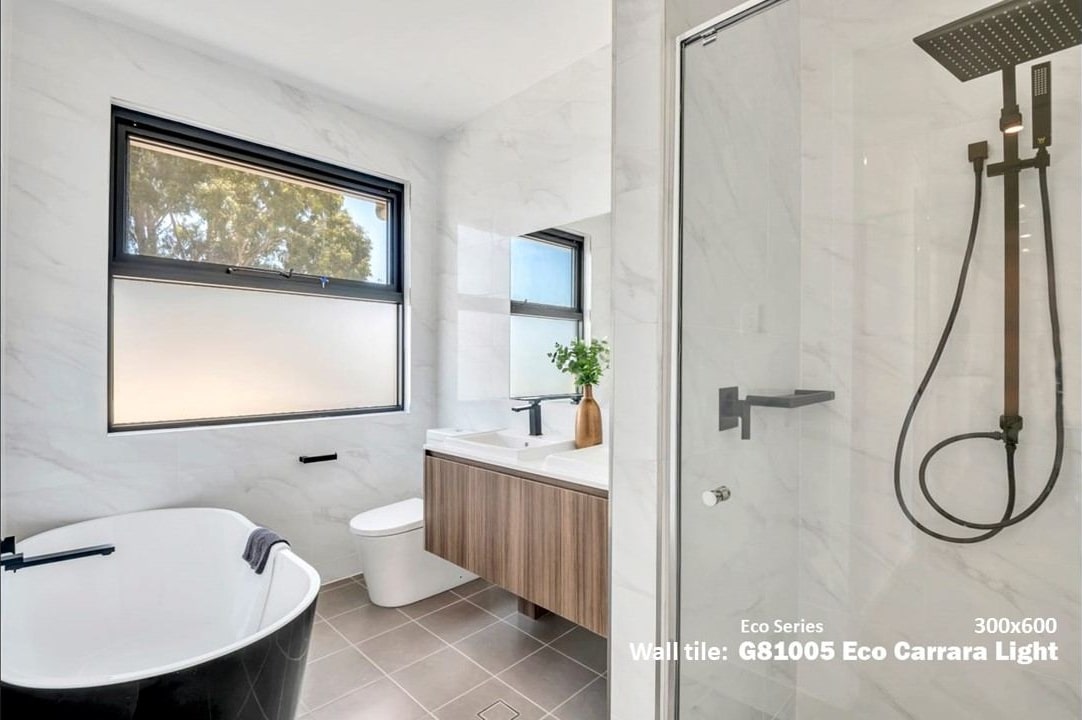
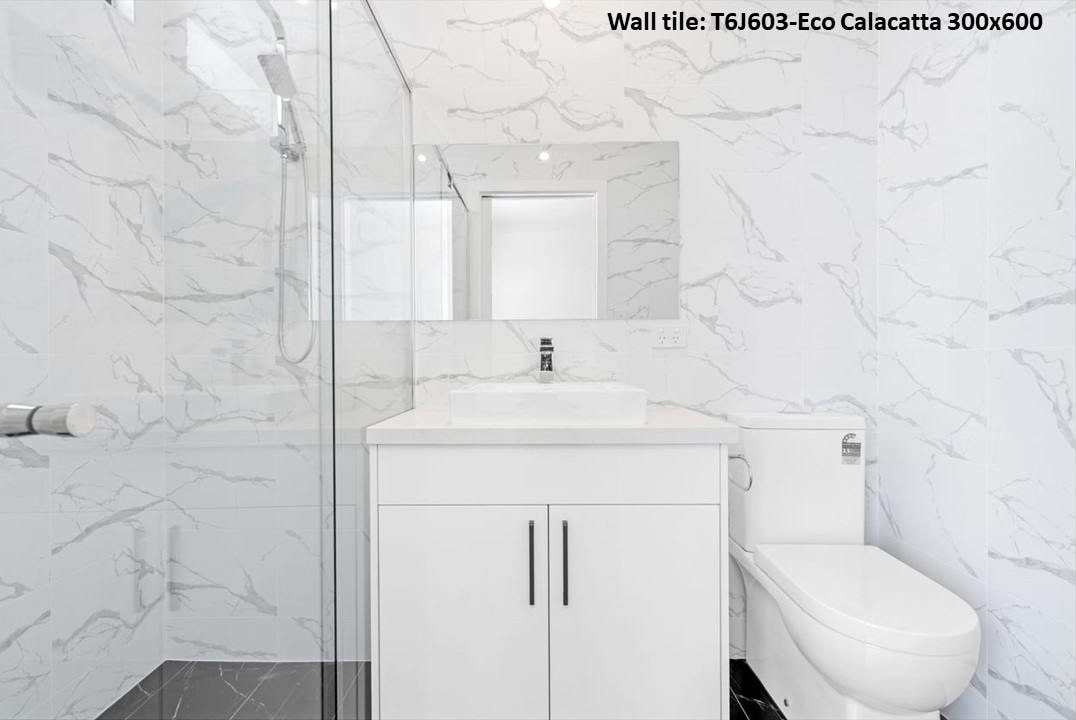
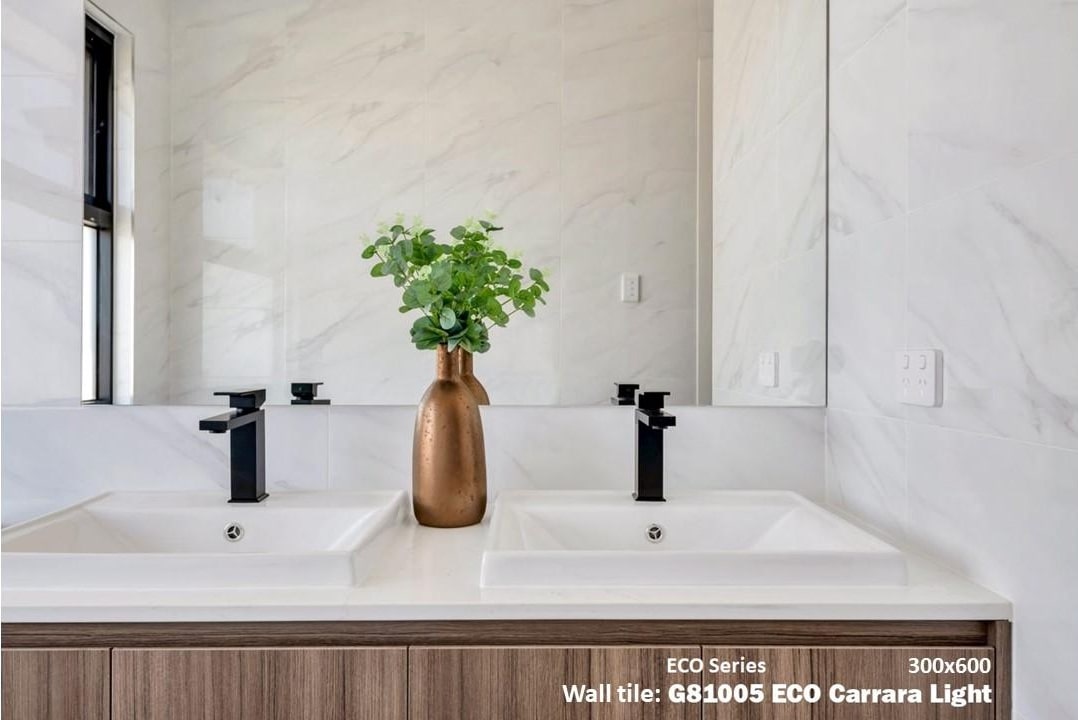
Here’s something many people don’t realise: tiles are not what keeps water out of your walls and floor. Tiles and grout are water-resistant, not waterproof. The real protection is the waterproof membrane applied behind and beneath them, along with correct falls to the waste and properly sealed junctions at corners, floor wastes and pipe penetrations.
In Australia, wet-area waterproofing is governed by the National Construction Code and Australian Standard AS 3740, and it should be carried out by a qualified, appropriately licensed waterproofer or tiler. Requirements can vary with the type and location of the project, so confirm what applies to your bathroom with your builder or building certifier before tiling begins.
Where we can help is on the tile side. We’ll check that the tiles you choose suit the area they’re going into, point you to suitable adhesives and grout, and give your tiler exact tile sizes and quantities, so the membrane and falls can be planned around them from the start. If you’re unsure whether a tile suits a shower floor or wall, ask before you buy.
Bathroom tile prices depend on material, format and origin. As a guide, most of our bathroom range sits between $20 and $150 per square metre. Floor tiles usually cost more per square metre than wall tiles, because they’re thicker, denser porcelain with a tested slip rating.
| Tile type | Indicative price per m² |
|---|---|
| Ceramic wall tiles, 300×600 to 600×600 | $20–$40 |
| Porcelain floor tiles (R10/R11), 300×600 to 600×600 | $30–$60 |
| Large format porcelain, 1200×600 and larger | $55–$110 |
| Marble-look and premium Italian porcelain | $70–$150 |
| Mosaics and feature tiles (niches, shower floors) | $60–$150 |
For a typical 2.4 m × 2.1 m family bathroom tiled to full height, you’ll need roughly 5 m² of floor tile and 20–24 m² of wall tile before wastage, plus about 1 m² of mosaic or feature tile for a niche. At our prices, that usually means around $900 to $2,500 in tiles, depending on the ranges you choose. Walls take most of the tile, so budget there first. Adhesive, grout, waterproofing and labour are extra. Because we’re factory direct, there’s no retail markup, and builders ordering bathroom renovation tiles Adelaide-wide can ask about trade pricing. Prices move with stock and shipments, so ask our team for a current quote.
Calculate the floor and walls separately, because they usually use different tiles. For the floor, multiply length by width in metres. For each wall, multiply length by height, deduct the door and any window, then add the walls together. Next, add wastage for cuts and breakages:
- Tiles up to 600×600: add 10%
- Tiles larger than 600×600: add 20%
Always buy full boxes from the same batch, and keep a few spares after the job. If a tile cracks years later, a matching replacement is much easier to find in your garage than in a shop. Use our bathroom tile calculator for multiple walls or an L-shaped floor, or bring your plans in and we’ll work it out with you.
Bathroom tile calculator
Measure in metres. We add 10% wastage for tiles up to 600 × 600 and 20% for anything larger.
Floor
Walls
Deduct doors, windows & openings
Totals are rounded up. Buy full boxes from the same batch and keep a few spares for future repairs.
Check stock with our team
“Michael and Raphael were incredibly helpful and patient with us as we went through our selection and purchasing process. I have never encountered such great customer service and I do not hesitate in recommending them to others. Five stars for value and service.”
“Aurees Tiles is the best place I found for wholesale tiles in value for money. A friendly team of professionals with years of experience and are willing to share their knowledge. Highly recommended and you won't be let down.”
“We received excellent service. The staff went out of their way to obtain some discontinued floor tiles for us. These had to come from interstate but the price was very reasonable and delivery was on time. Shellvey is a super customer service person but all staff were friendly and there were no hiccups.”
What Adelaide Customers Say


Bathroom tile selection service — Cavan showroom
Our showroom at Unit 2/517 Cross Keys Road, Cavan SA 5094 is the easiest place to compare bathroom tiles Adelaide has in stock, side by side.

Bring your plans, your builder’s or tiler’s measurements, and photos or samples of your vanity and tapware finishes, and we’ll help you match floor, wall, shower and niche tiles in one visit. Take samples home to check them in your own light, and pick up in-stock tiles the same day. Our team will also check slip ratings and quantities on the spot.
We’ve helped with family bathrooms in Modbury, beachside renovations in Henley Beach and ensuites in Tea Tree Gully. See finished projects in our bathroom gallery, and if the laundry is next, our laundry tiles often match bathroom ranges.
- Monday to Friday: 7:30am – 4:15pm
- Saturday: 8:00am – 3:45pm
- Sunday: 9:00am – 3:15pm
Call (08) 8359 5933 or contact our team to plan your visit.
Bathroom tiles FAQs
We usually recommend R10 for the main bathroom floor and R11 or a mosaic for the shower floor where water sits on the surface. The requirements will vary depending on the project and the exact location, so for new builds or other regulated work you should confirm the rating with your builder or certifier before ordering.
Often, yes. Many porcelain ranges suit both, and one tile throughout creates a seamless look that works especially well in small bathrooms. Check that the floor version has a suitable slip rating. Some ceramic wall tiles aren’t designed for floors, so ask us before you order.
Yes. Large-format tiles reduce grout lines, which makes a small bathroom look bigger and easier to clean. They need a very flat substrate and an experienced tiler. On the shower floor, a smaller tile or mosaic usually works better, unless your tiler uses a linear drain so the floor falls in one direction.
A small-format porcelain tile or mosaic with an R11 or similar grip finish is usually best. Small tiles follow the fall to the waste, and the extra grout joints add grip underfoot. Some ranges come in a matching grip finish, so your shower floor can match the main bathroom floor.
Glazed porcelain and ceramic tiles don’t need sealing. Natural stone does, and some unglazed or polished porcelain benefits from a sealer, so follow the manufacturer’s guidance. Grout is porous, so sealing it, or using an epoxy grout in the shower, helps it resist staining and mould.
The key thing here is ventilation. Run the exhaust fan while you are showering and for a while after. Squeegee the walls. Clean the grout regularly with a mild, pH-neutral cleaner. Sealed or epoxy grout is also more resistant to mould and larger tiles means fewer grout lines to take care of. Replace broken silicone quickly; trapped moisture promotes mould.
Yes, with caution. Natural stone is more porous than porcelain so needs sealing and resealing from time to time and acid cleaners can etch marble. If you love the look but want less upkeep, marble-look porcelain gives you the veining with far less maintenance. And it comes in bathroom-suitable slip ratings.