The laundry isn't as glamorous as a kitchen or bathroom, but it definitely works harder than either. When choosing laundry tiles in Adelaide, remember that the floor takes splashes from the trough, the weight of a fully loaded washing machine, and the odd dropped bottle of detergent. The wall behind the tub has to take soap, steam and wiping.
In many Adelaide homes, the laundry also doubles as a mudroom or a back entry from the yard. In newer townhouses and units, you’ll often find a compact euro laundry tucked behind cupboard doors. That mix of uses is why laundry tiles should be chosen for performance first and appearance second.
This guide explains what to look for in laundry floor and splashback tiles, where finish and size matter, and what to check before you buy or book a tiler.
Adelaide's best floor tiles are matt or textured porcelain. Easy-to-clean ceramic or porcelain tiles are best for splashbacks. Floor tiles should have a P3 or R10 slip rating for wet areas. Since no one walks on backsplash tiles, they can be gloss or lappato. The room can withstand moisture, dirt, and years of use with epoxy grout and compliant waterproofing.
A laundry combines water, chemicals, weight and foot traffic in a small footprint, and few other rooms in the house do all four at once.
In a typical week, the washing machine vibrates on the same few tiles, the trough splashes the wall, wet baskets are dragged across the floor, and the back door lets in grit from the garden.
Common sources of wear include:
In older Adelaide homes, where the laundry often sits at the back of the house beside the yard, outdoor grit is a bigger factor than many people expect. In compact units and new builds, the more common challenge is humidity in a small room with limited ventilation.
Laundry floor tiles need to be slip-resistant, low in water absorption and strong enough to carry heavy appliances.
If you're comparing options, browsing a dedicated laundry tile collection makes it easier to see which formats and finishes are commonly used in this room. It also helps to look more broadly at durable floor tile options, as many tiles intended for entries and living areas are equally suited to a laundry floor.
Porcelain is denser than ordinary ceramics and absorbs only a small amount of water, usually 0.5% or less. When looking for durable laundry tiles, Adelaide homeowners should always choose porcelain; its density makes it a better choice for wet-exposed floors that require stain resistance. Ceramic tiles are generally a better choice for walls that will not be subjected to any load or foot traffic.
In Australia, slip resistance is evaluated in accordance with AS 4586, and the results are expressed as either a P rating (wet pendulum test) or an R rating (oil-wet ramp test). The most common benchmark for residential laundry rooms is either P3 or R10, but the appropriate rating depends on how the room is used.
While finish alone is not a rating, a matte or textured finish typically performs better underfoot than a polished one. If the laundry opens to the outdoors, ask to see the tile test certificate or specification sheet before you sign.
For most laundries, 300 x 600 mm or 600 x 600 mm floor tiles are a good compromise. The larger sizes mean fewer grout lines to clean, but they do require a very flat substrate and can make it more difficult to create a gentle fall to the floor waste. Smaller tiles, such as 300 x 300 mm, are easier to grade towards a drain and provide grip through more grout joints.
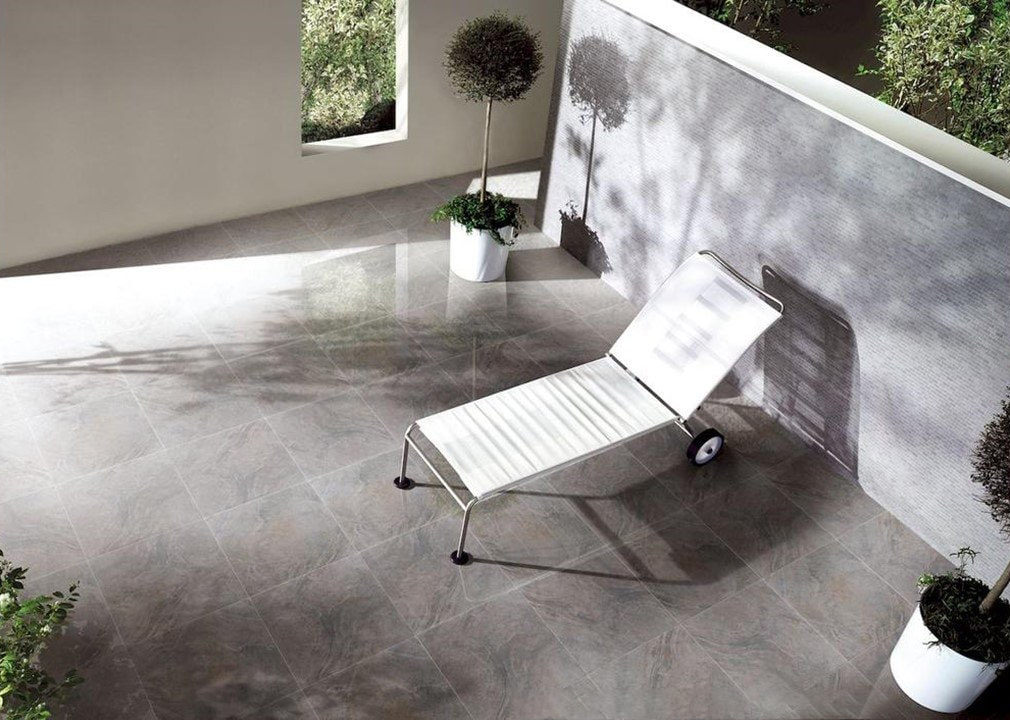
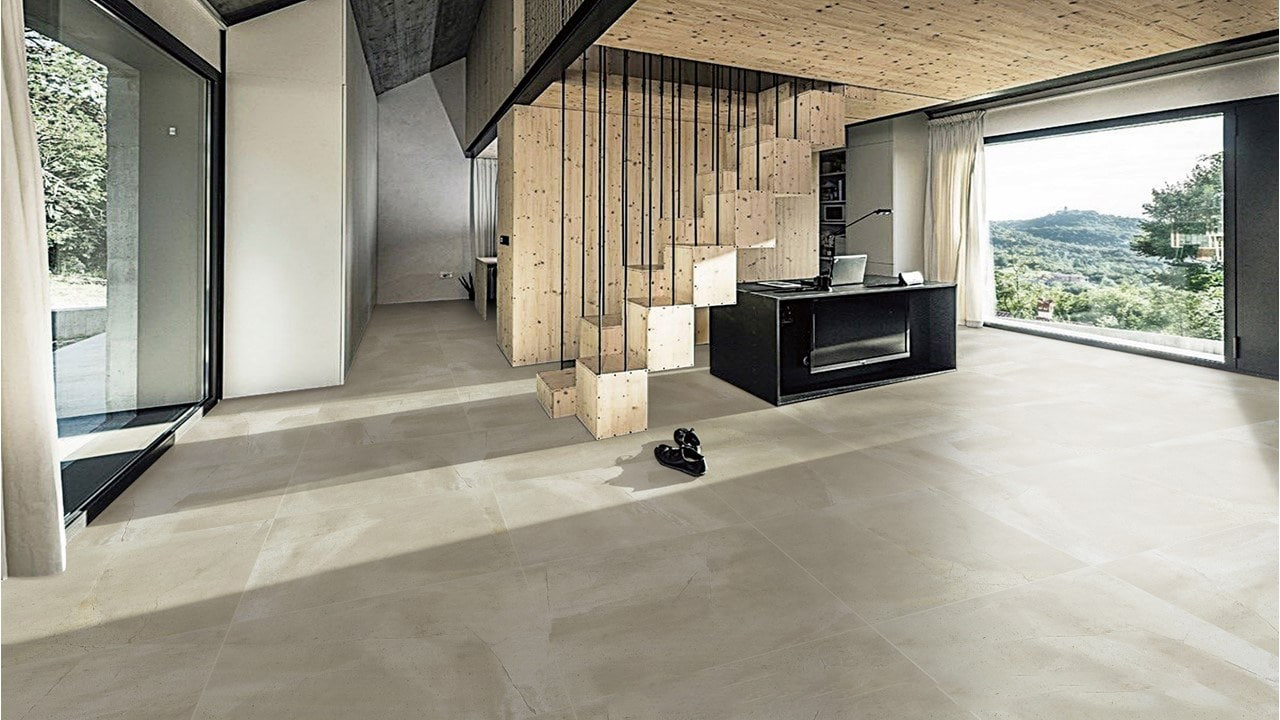
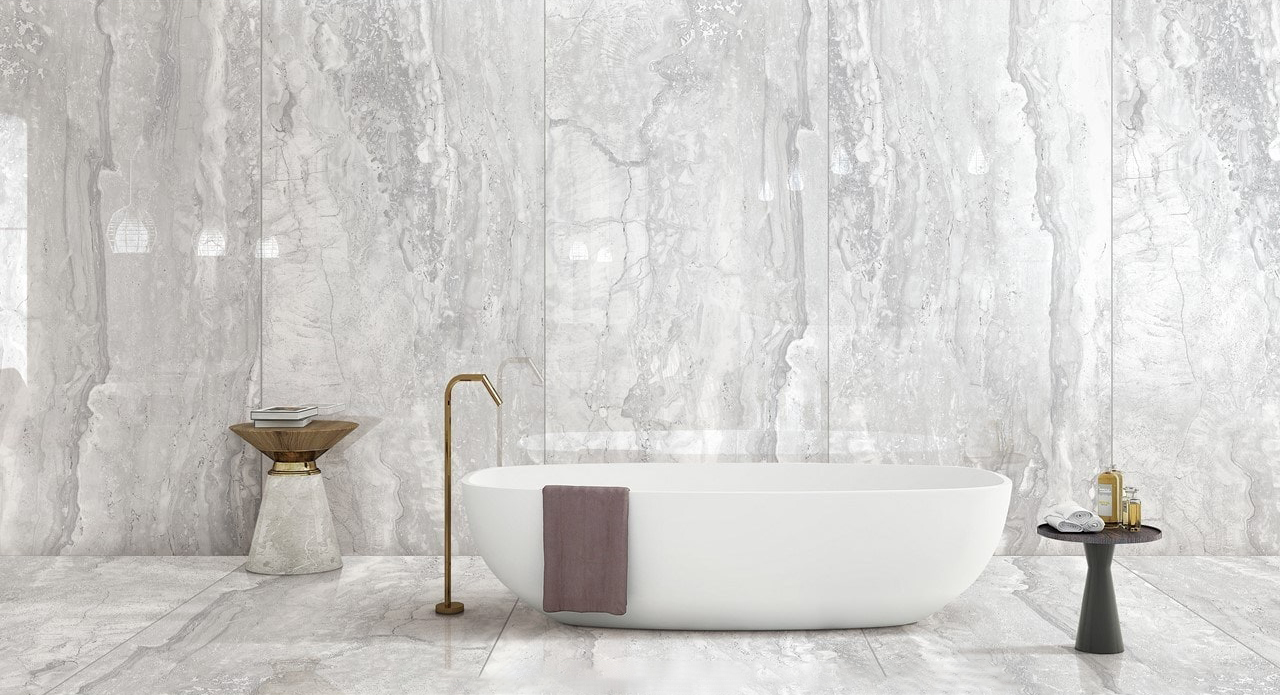
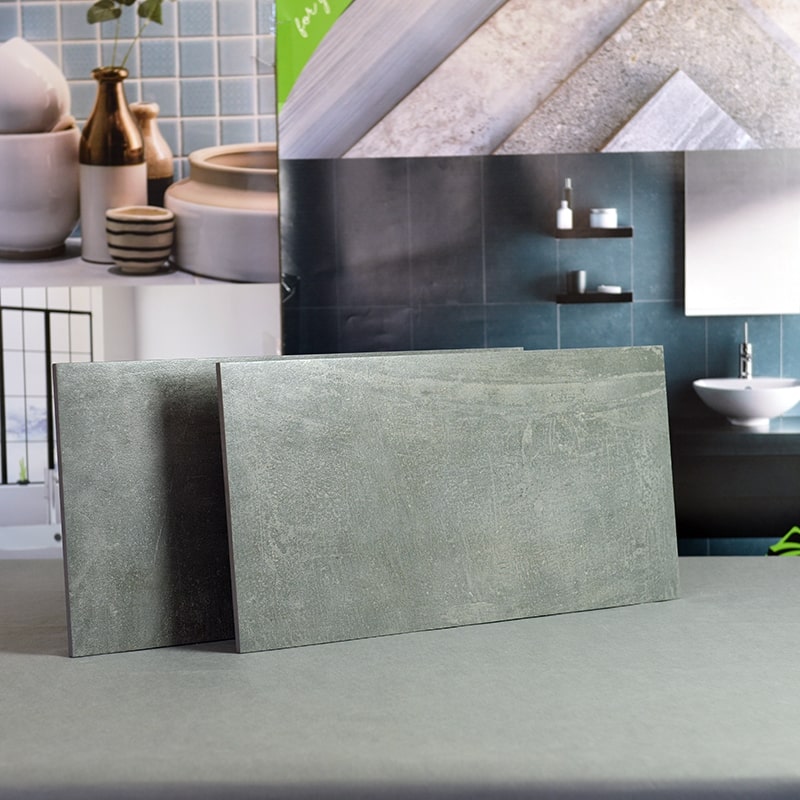
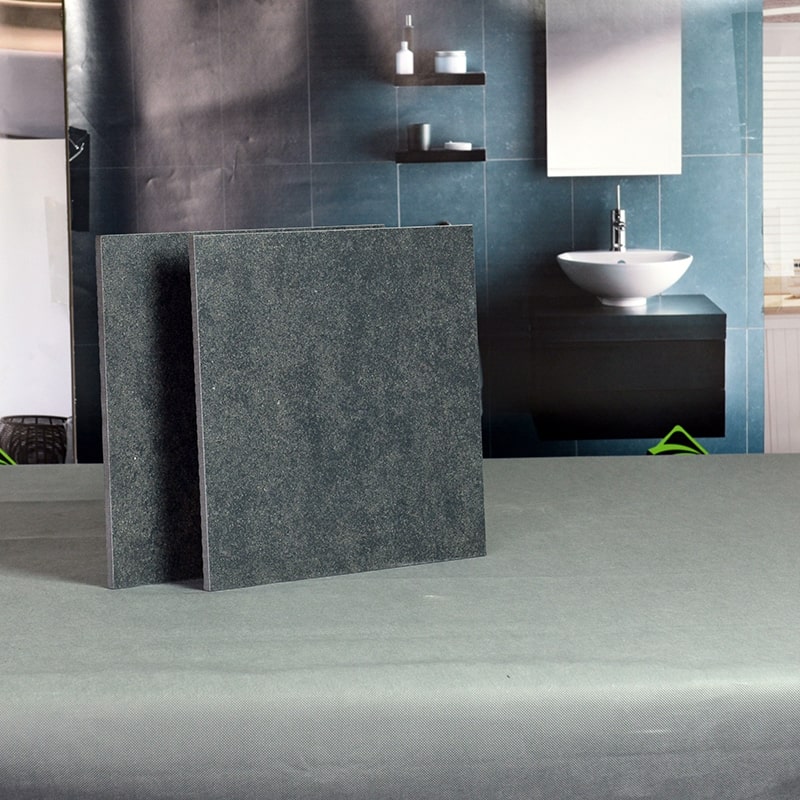
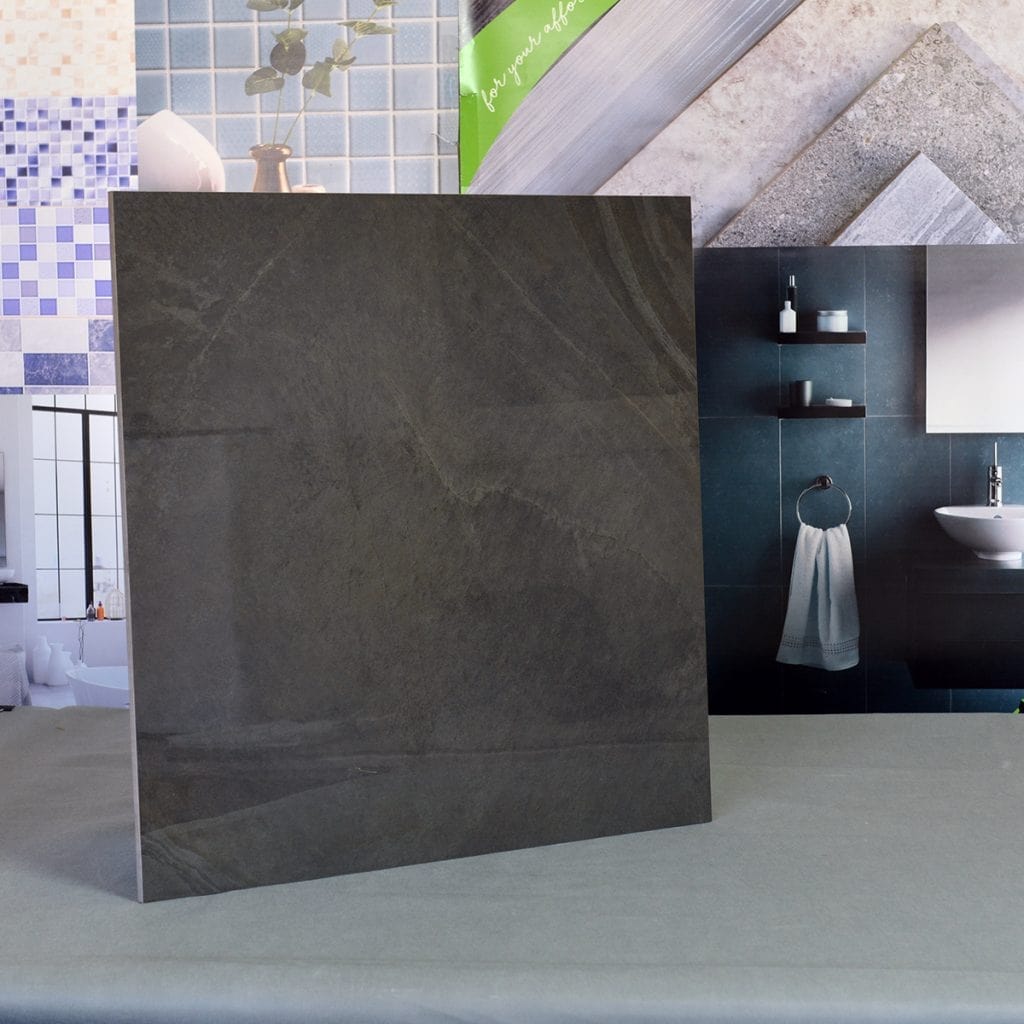
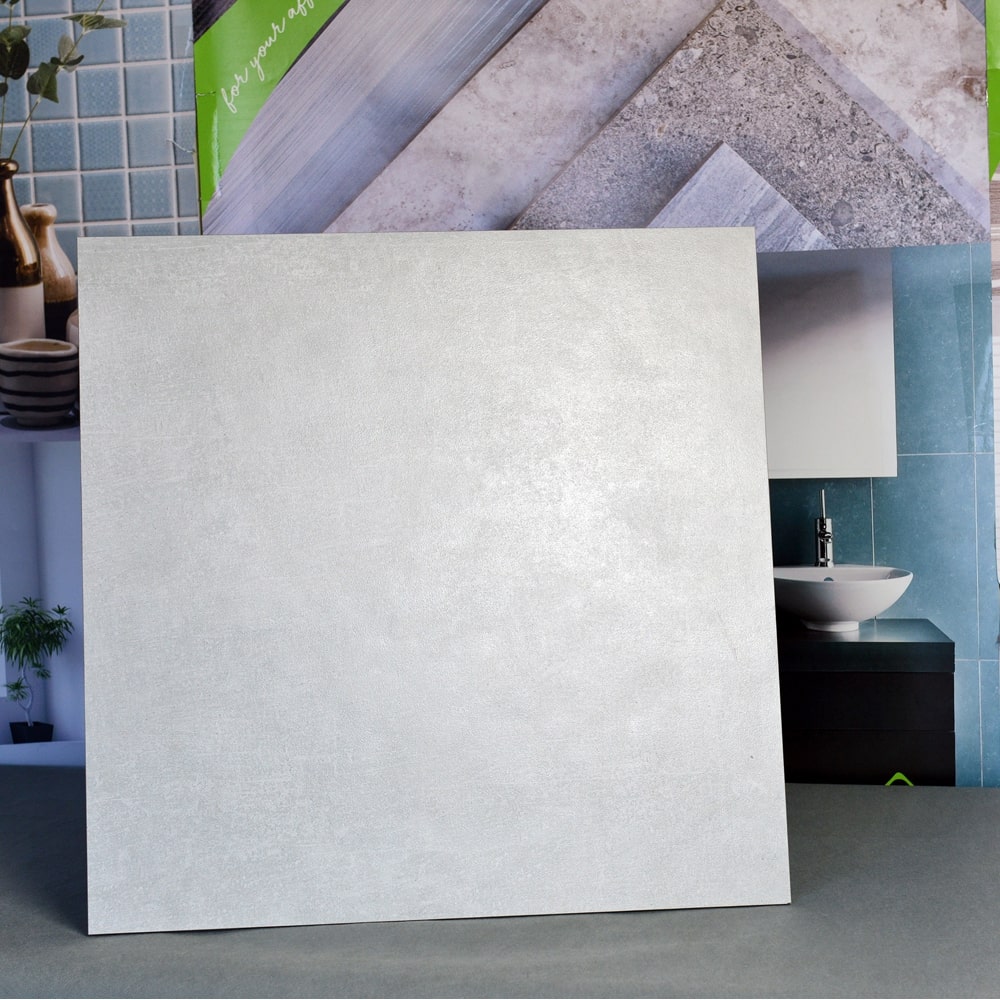
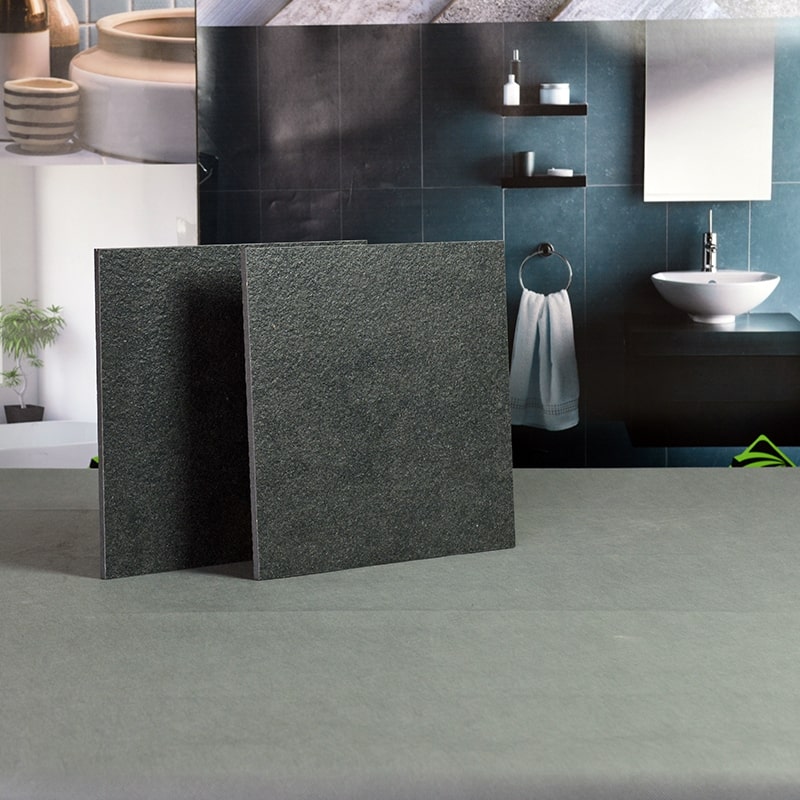
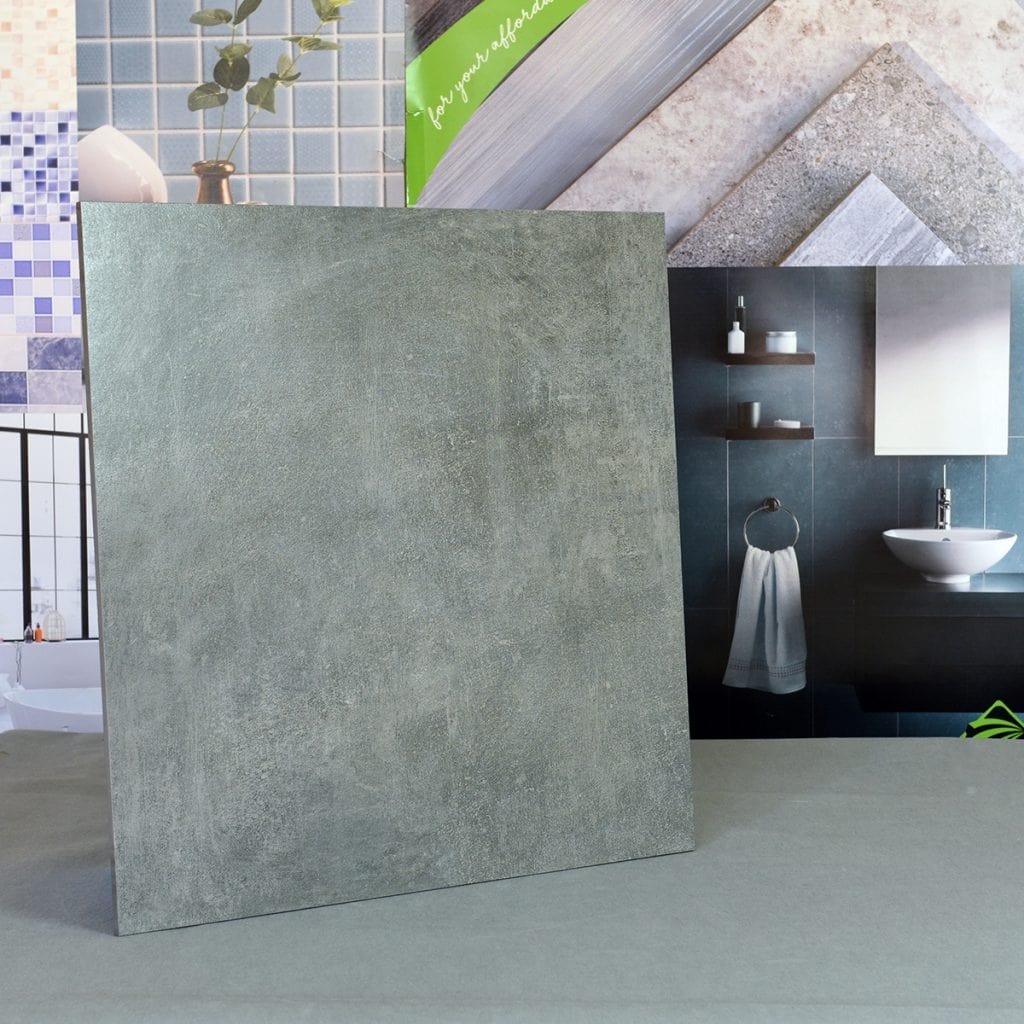
Concrete-look and mid-toned neutral tiles have become popular choices for laundry floors because they hide lint, dust, and the odd footprint between cleans.
A good laundry splashback tile is easy to wipe down, resists staining and suits the size of the wall behind your tub or benchtop.
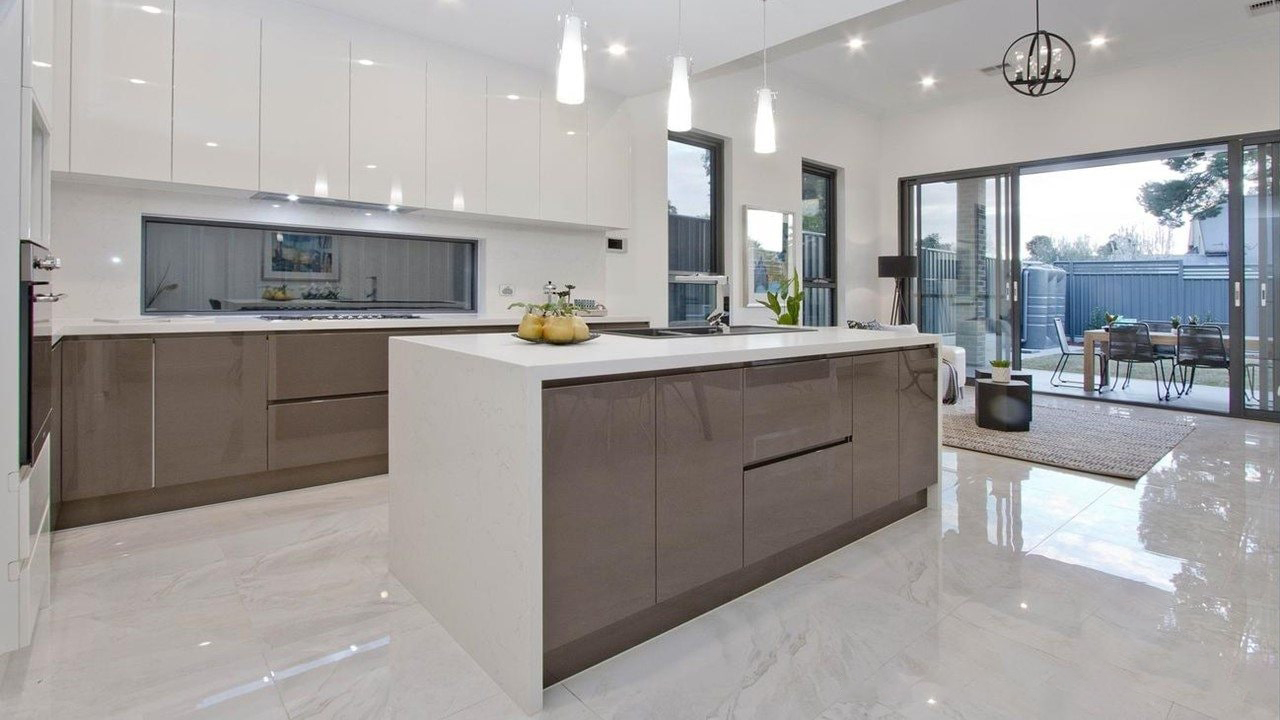
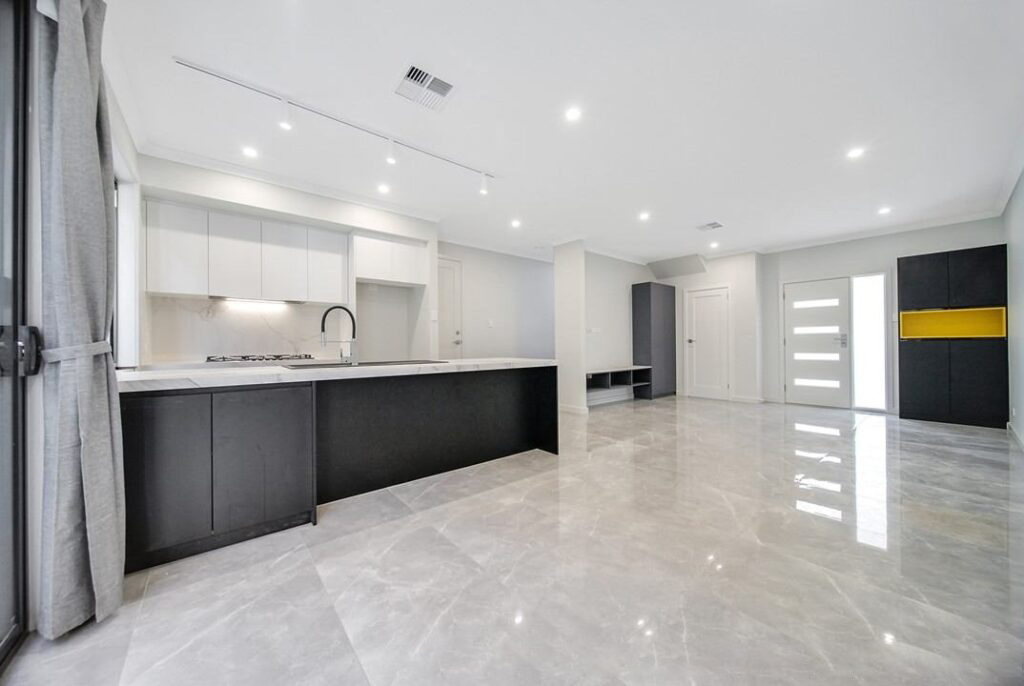
Because splashbacks aren't walked on, slip resistance isn't a concern, so gloss, lappato and polished finishes are options. Gloss tiles reflect light well and can brighten a laundry with a small window or none at all. They do show water spots more readily, so a satin or lappato finish can be a sensible middle ground.
Popular splashback approaches in Adelaide homes include:
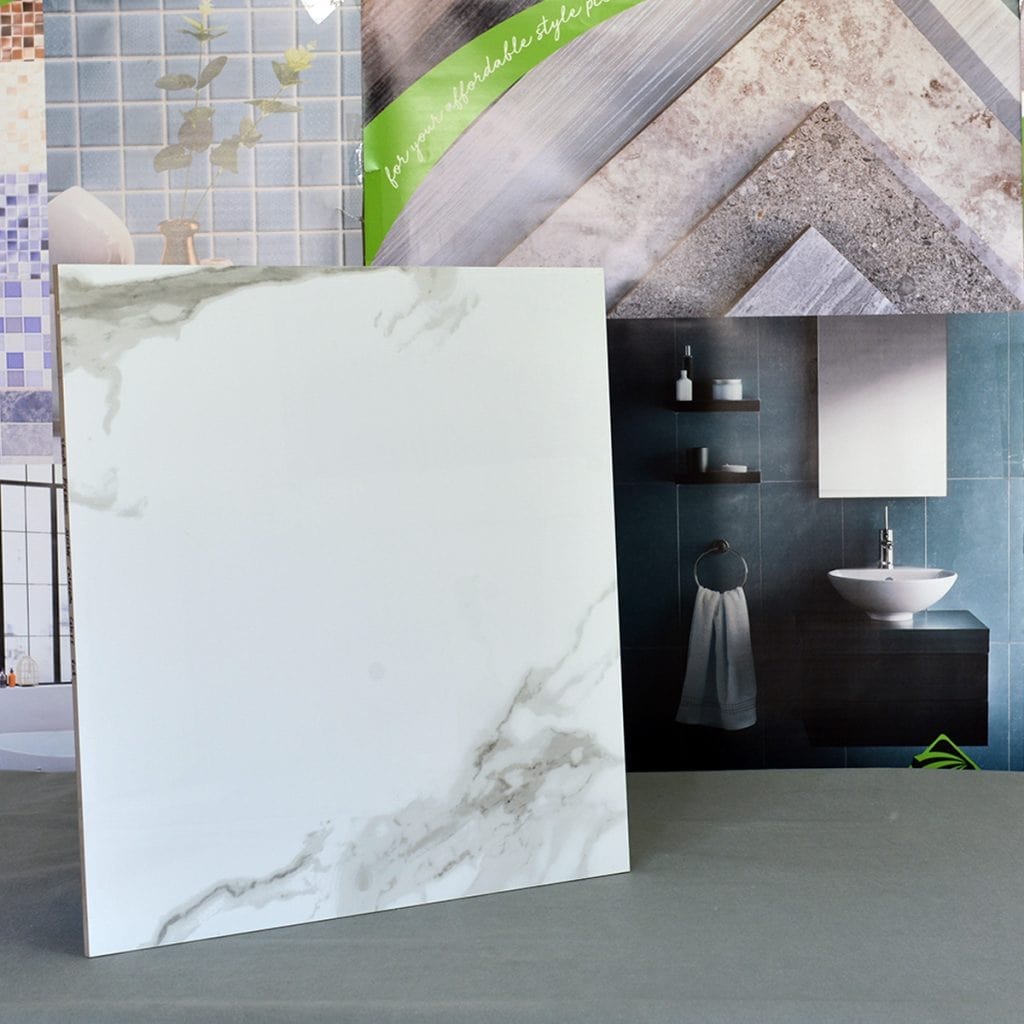
When narrowing down choices, look at wall tiles suited to wet areas and confirm each one is rated for internal wall use near water. For a more refined finish, marble-look tile designs in Carrara or Calacatta styles give the appearance of stone without the sealing and etching concerns that come with real marble and acidic cleaning products.
Floor and splashback tiles face different stresses, so priorities shift depending on where the tile is installed.
| Consideration | Laundry Floor | Laundry Splashback |
| Main demands | foot traffic, water and appliance weight | splashes, soap residue and frequent wiping |
| Preferred material | porcelain | ceramic or porcelain |
| Typical finish | matt or textured | gloss, satin, lappato or matt |
| Slip resistance | essential (P3 or R10 is a common benchmark) | not required |
| Common sizes | 300 x 600 mm, 600 x 600 mm | 300 x 600 mm, subway formats, mosaics |
| Grout priority | stain resistance and sealing | mould resistance and easy cleaning |
| Waterproofing | required across the floor as a wet area | required in the splash zone around taps and tubs |
These are general guidelines, so always confirm a tile's intended application before you buy.
The easiest answer is to keep one surface quiet and let the other be livelier.
A pattern that comes up often in laundry renovations is choosing a striking splashback first, then struggling to find a floor that suits it. Working floor-first usually avoids that problem.
Even the most suitable tile will underperform if what sits around and beneath it isn't done properly.
Standard cement-based grout is porous and will absorb detergent and dirt unless it's sealed. Epoxy grout costs more and is harder to apply, but it resists stains and moisture far better, which suits laundry floors. Whichever you choose, keeping grout lines clean and sealed will do more for the room's appearance over time than almost any other habit.
Laundries are treated as wet areas under the National Construction Code, and waterproofing should be carried out in line with AS 3740. Requirements apply to the floor and to the walls around tubs and taps. A licensed waterproofer or builder can confirm exactly what applies to your home.
Laundry floors frequently require a fall to a floor waste, and splashbacks need clean cuts around taps, power points and cabinetry. If you're considering a DIY job, it's sensible to know when to call in a professional tiler before you start.
When selecting the right laundry tiles, prioritise safety, durability and ease of cleaning over style. Slip-rated porcelain on the floor, an easy-wipe splashback on the wall, and good grout and waterproofing underneath both will keep the room functioning well for years.
Before you decide, measure up the space, see where the water is likely to fall, and look at samples under the room's own light. Request spec sheets & slip ratings. Allow about 10% extra for cuts and breakages for standard tile sizes.
Visiting a tile showroom to compare finishes side by side and talk through your laundry's layout is a sensible next step.
Porcelain with a matt or textured finish and a suitable slip rating is generally the best choice. It absorbs very little water, resists stains and handles the weight of appliances well.
Yes, if the tile is rated for both floor and wall use. Many porcelain tiles work well in both applications for a seamless look, but check the floor's slip rating before you buy.
Gloss tiles are generally not recommended for laundry floors because they become slippery when wet. They work much better on splashbacks, where slip resistance isn't a concern.
Yes. Laundries are classified as wet areas in the National Construction Code, and waterproofing should comply with AS 3740. A licensed waterproofer can determine what your home needs.
Many laundry splashbacks run from the benchtop or tub to the underside of the overhead cupboards. In euro laundries and rooms without upper cabinets, full-height tiling is a common choice because it protects the whole wall.
It is normal to allow an extra 10% for wastage on tiles up to 600 x 600 mm. Larger formats usually require a larger allowance, often around 20%. Cuts and breakages.
Usually, the most forgiving grout colour for laundry floors is a mid-tone grey or a colour that closely matches the tiles. Light grout looks smart on splashbacks but shows detergent and dirt sooner, so it is best sealed regularly.
Designing a hard-working utility room means balancing practical demands with smart material choices. Whether you are building a brand-new home or updating an established property, investing in high-performing laundry tiles that Adelaide residents rely on will protect your floors and walls from everyday wear, moisture, and heavy appliances.
By prioritising slip-resistant porcelain flooring, easy-to-wipe splashbacks, and durable epoxy grout sealed to perfection, you can ensure your laundry room stays functional, safe, and visually appealing for years to come.
Take the time to measure your space, order physical samples to view under your room's specific lighting, and consult a professional tiler or waterproofer whenever compliance questions arise. Finding the right laundry tiles for Adelaide homes is a low-maintenance investment that lasts for years.