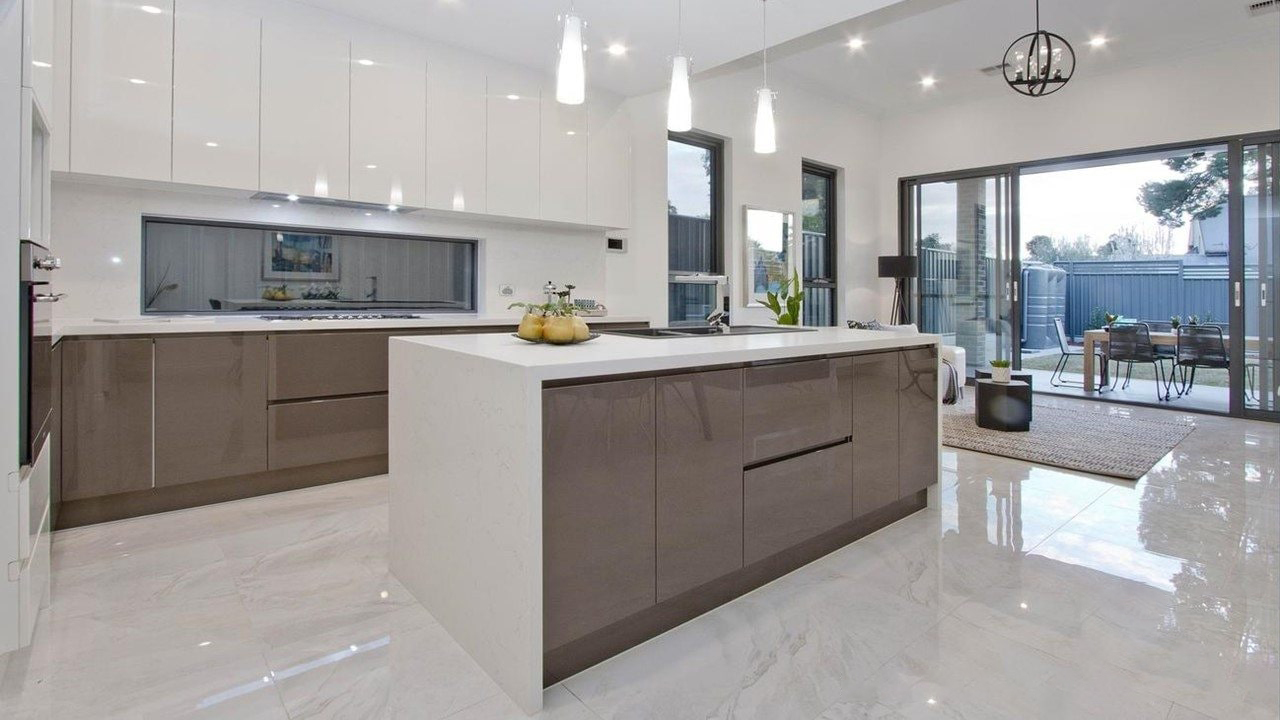
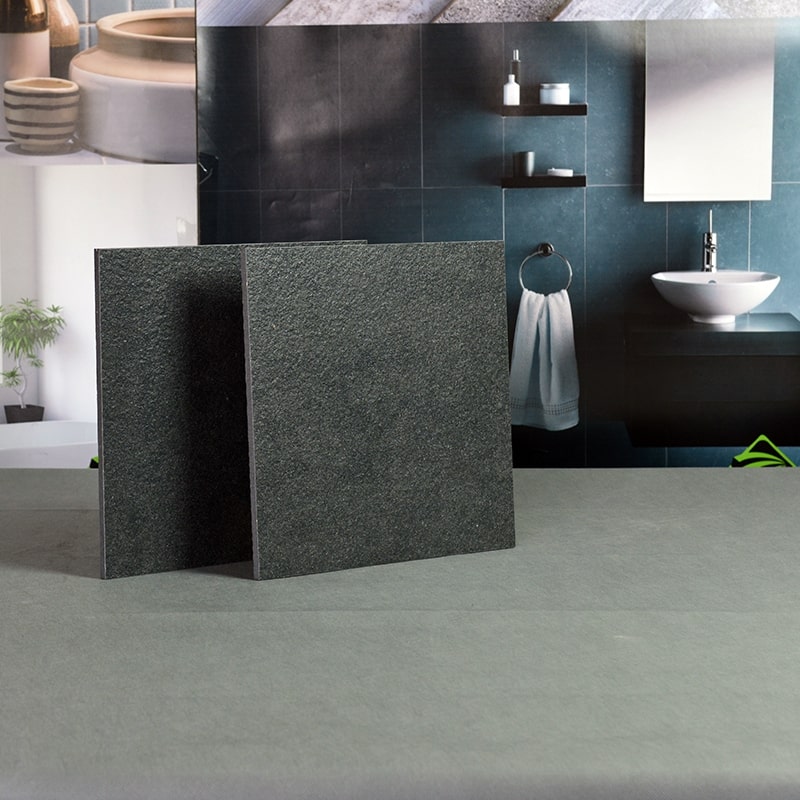
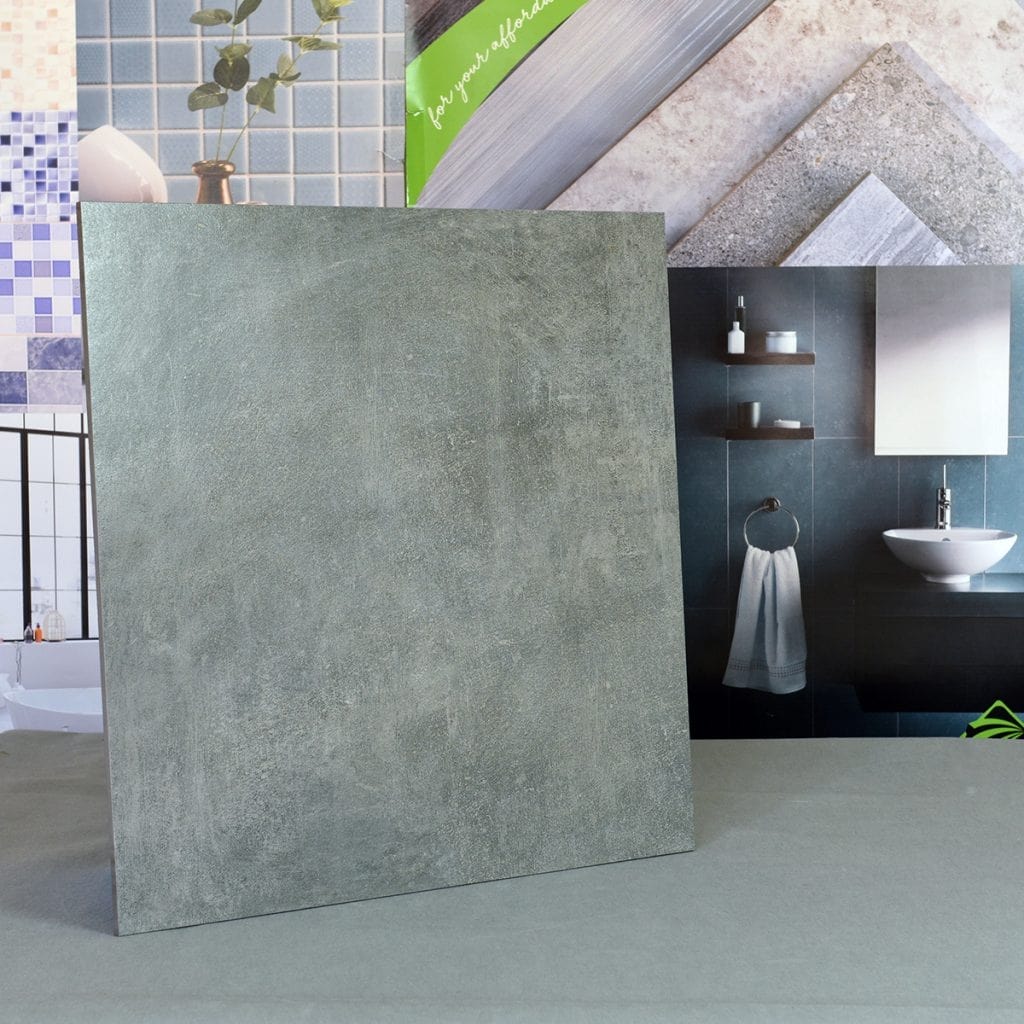
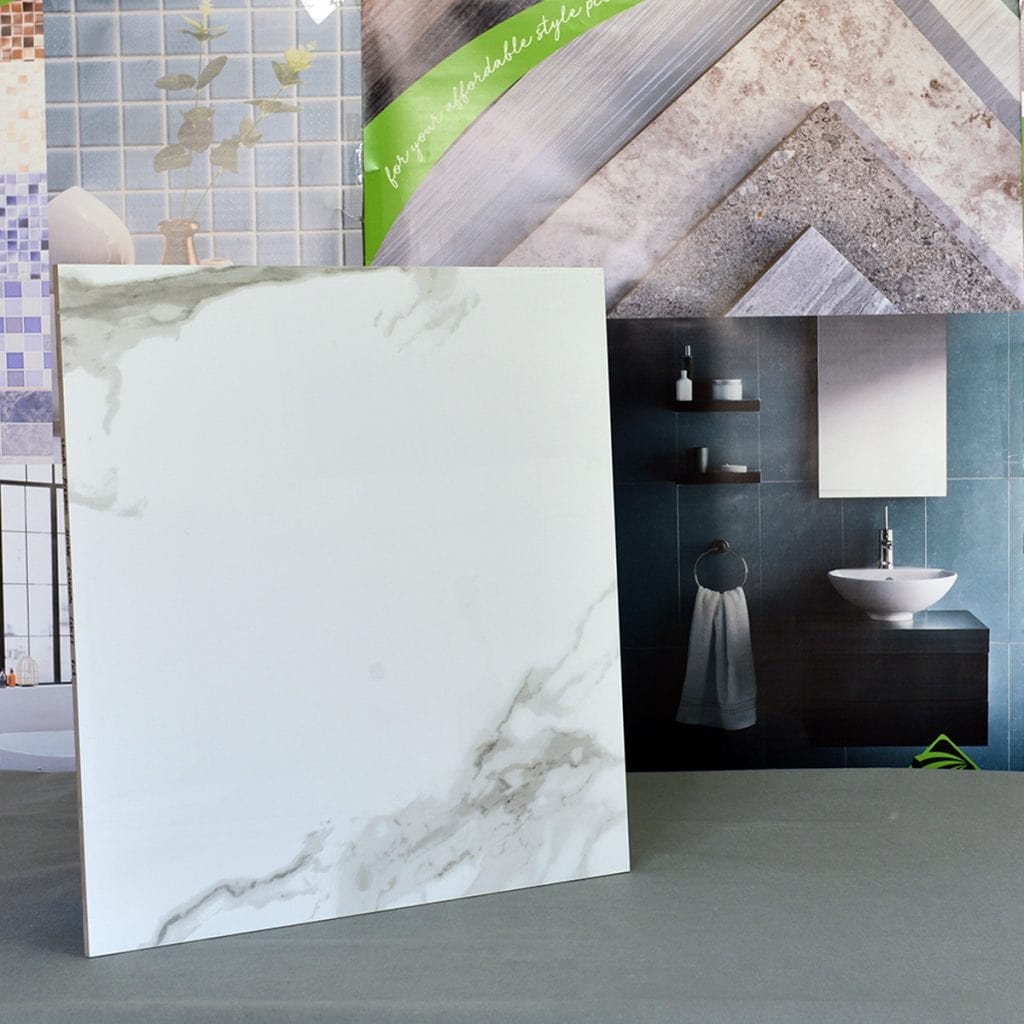
There’s a clear shift in what people choose for their kitchens these days. It's no longer just splashback tiles behind the stove; now, large porcelain slabs do double duty as both a benchtop and a splashback, wrapping around the kitchen as one continuous surface.
It’s not really a passing trend borrowed from a renovation show. It reflects a genuine change in how Adelaide homeowners are thinking about kitchen materials: fewer joins, less upkeep, and a finish that can mimic marble, concrete or natural stone without some of the drawbacks of the real thing.
If you're weighing up tile options in Adelaide for an upcoming kitchen project, it's worth understanding how porcelain benchtops and splashbacks actually perform day to day, not just how they look under showroom lighting.
Yes. Porcelain benchtops and splashbacks are worth considering if you want a durable, low-maintenance kitchen surface. They resist heat, scratches and stains, offer a wide range of realistic finishes, and often cost less than many natural stone alternatives. Professional fabrication and installation are essential for the best results.
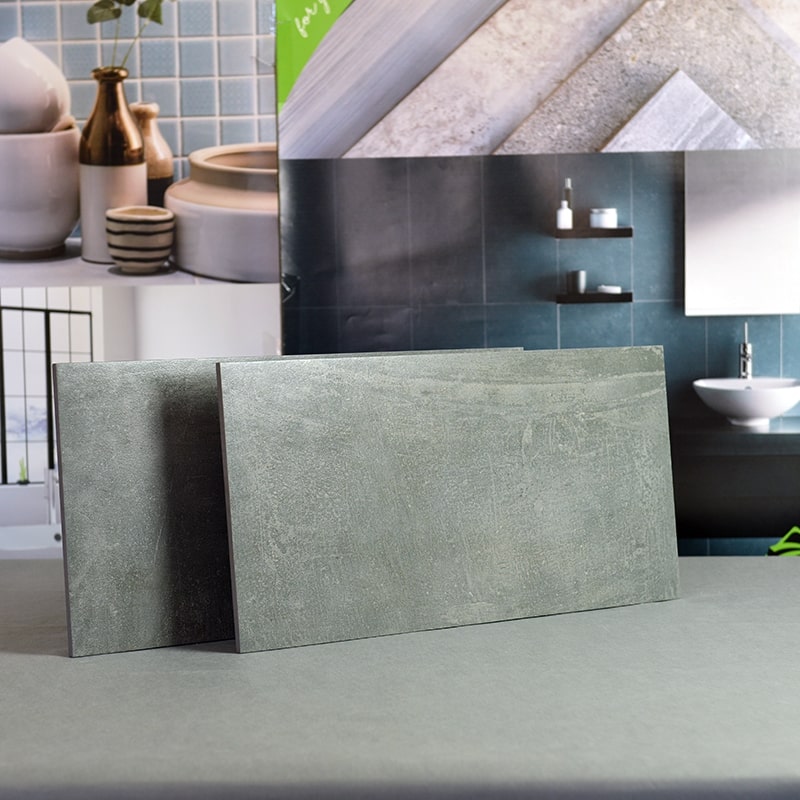
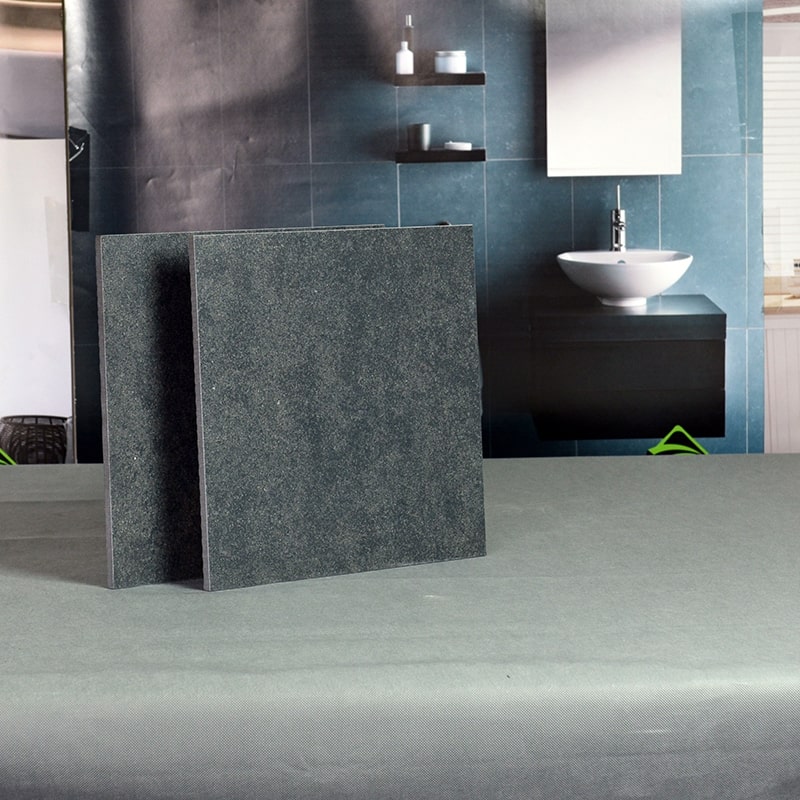
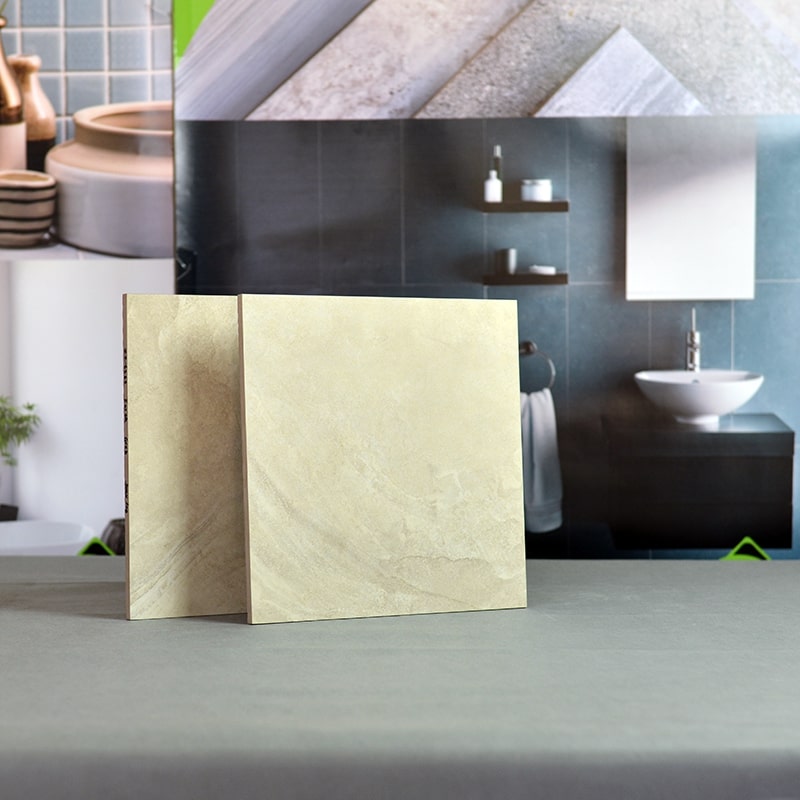
Porcelain benchtops start life the same way as porcelain floor and wall tiles: refined clay is pressed under high pressure and fired at high temperatures, producing a dense, low-porosity material. What sets benchtop-grade porcelain apart are its size and thickness.
Where a standard wall or floor tile might run 6mm to 10mm thick, benchtop-grade porcelain slabs are produced in large formats, often over a metre wide, and in thicknesses of 6mm, 12mm or 20mm, depending on whether they are being used as a splashback, a benchtop, or a waterfall edge running down the side of an island bench.
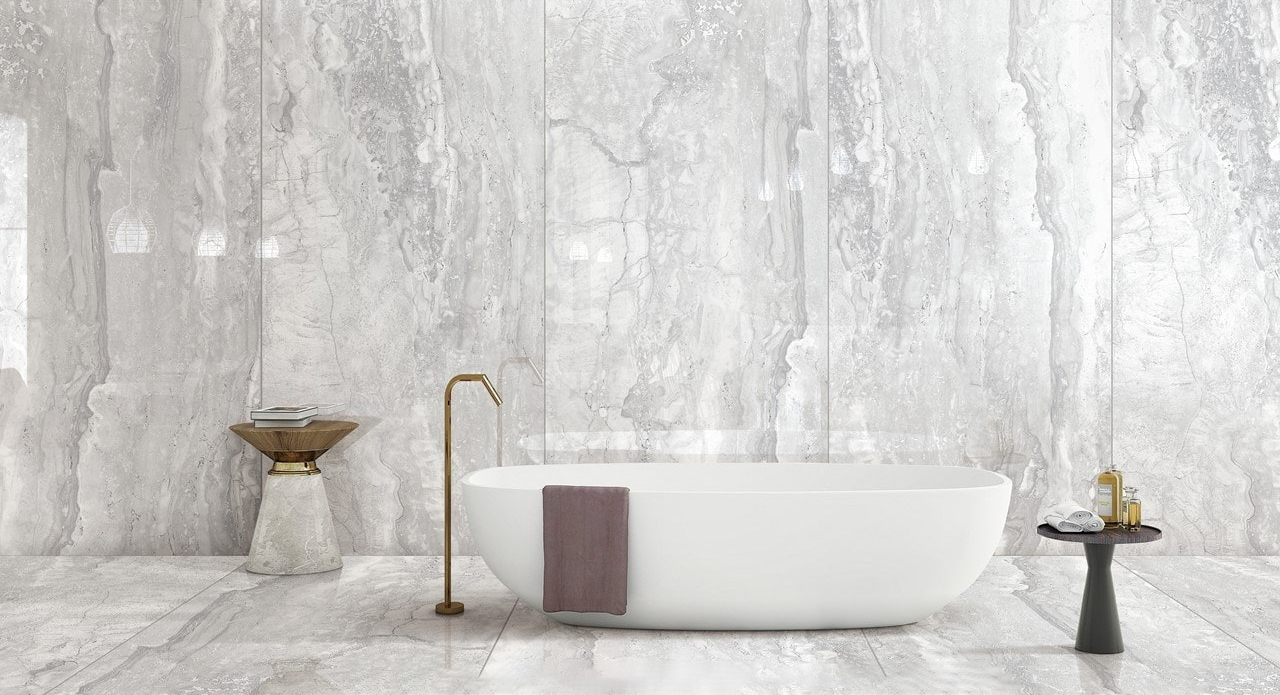
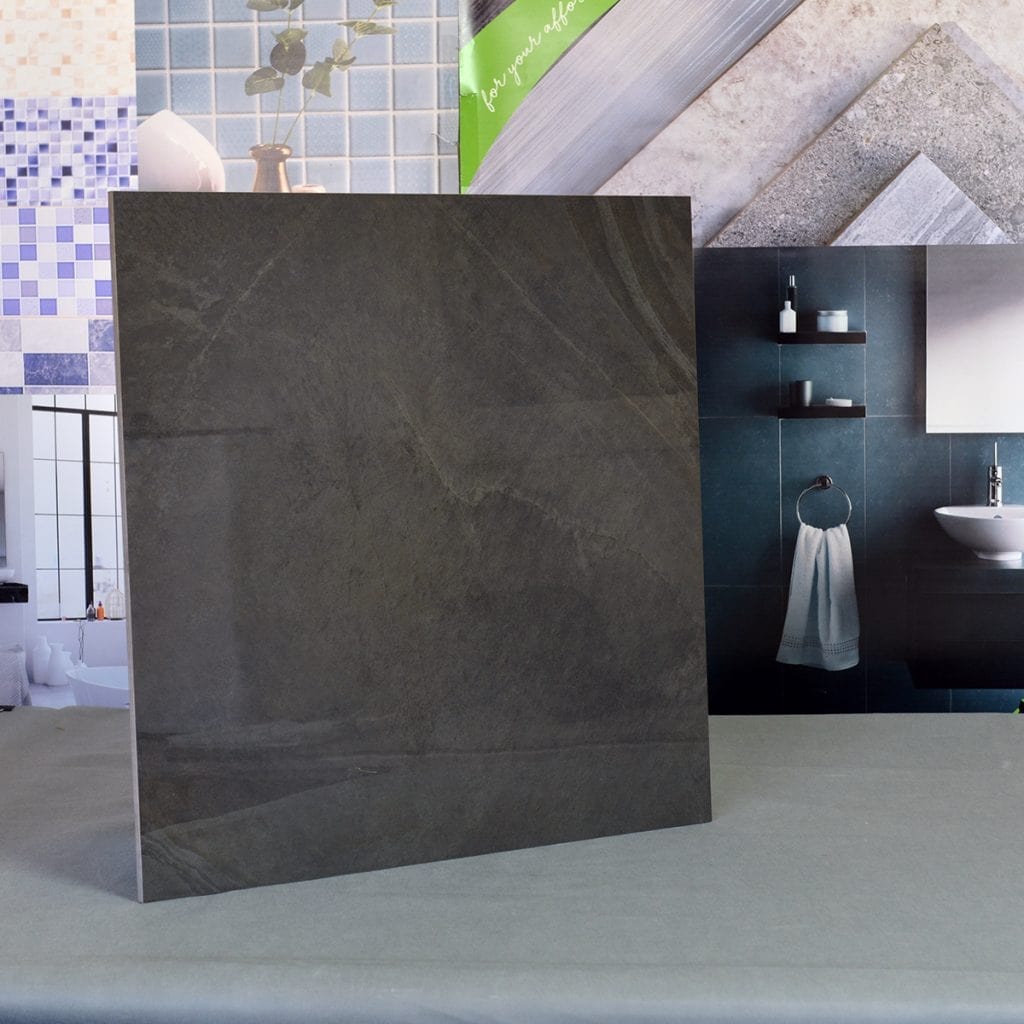
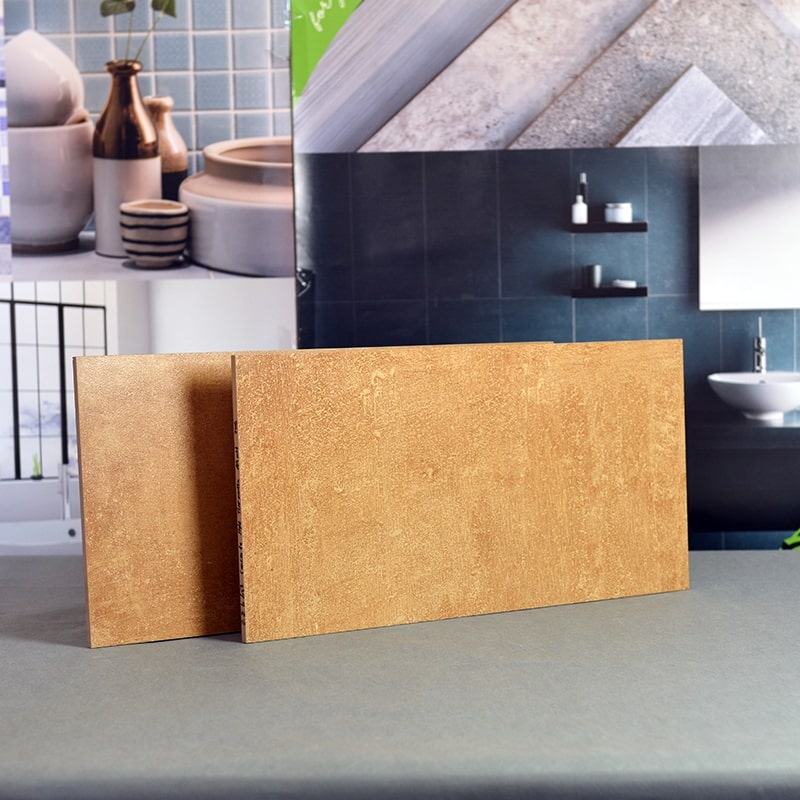
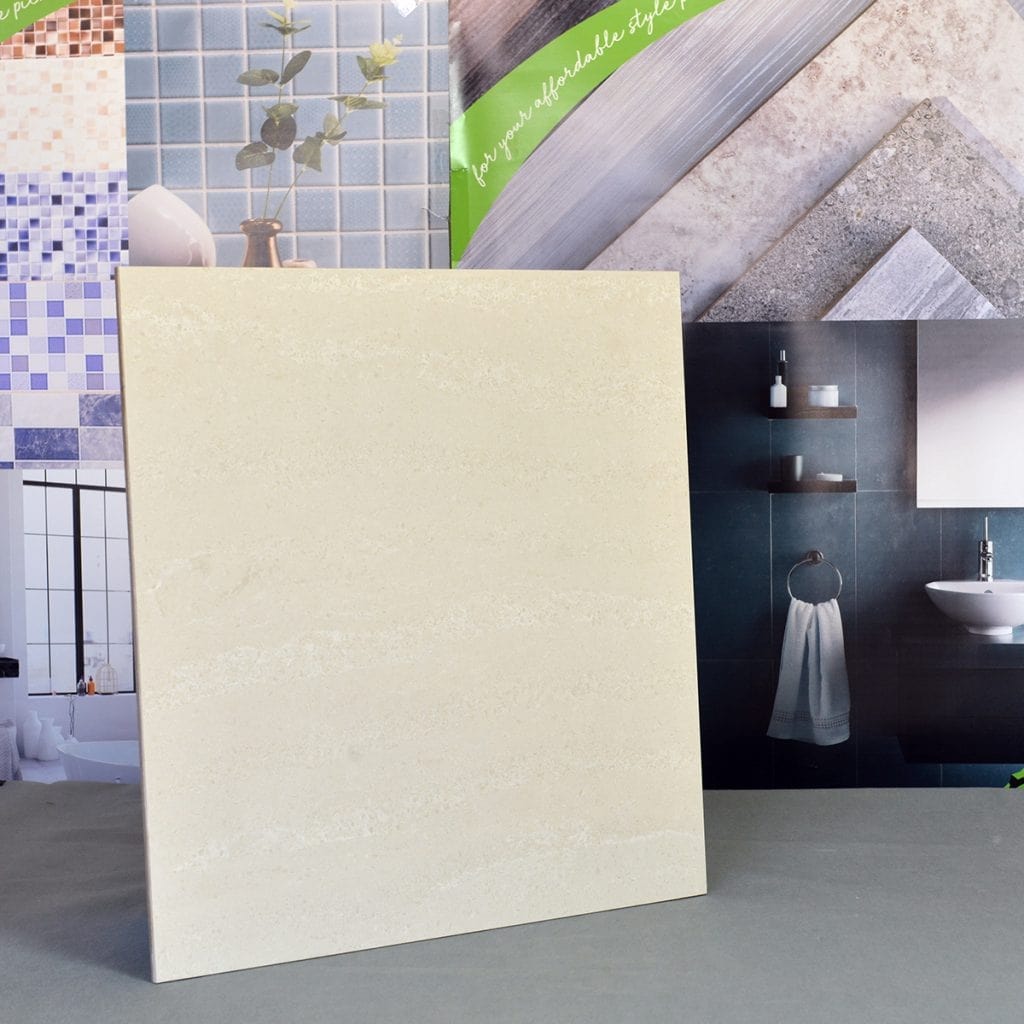
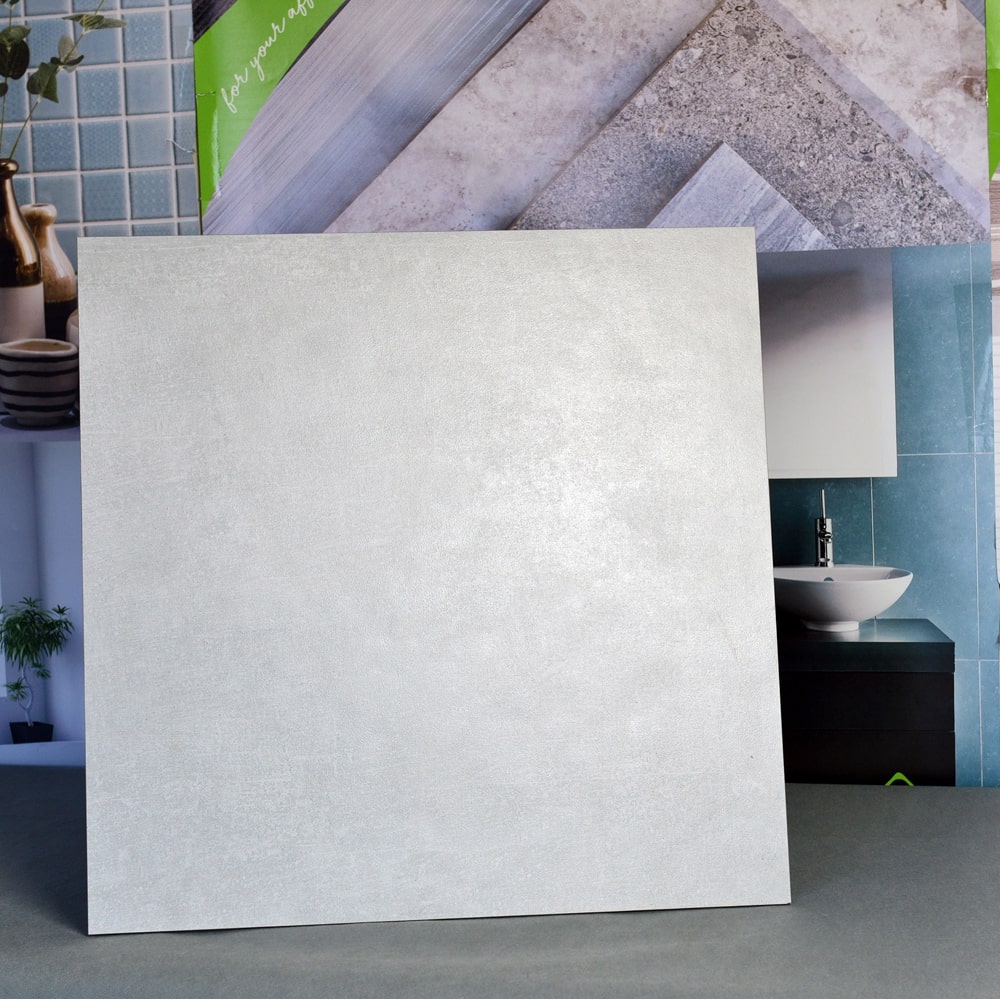
Digital printing technology allows the same slab format to replicate the veining of Calacatta marble, the texture of raw concrete, or the grain of timber, which is why porcelain has become a realistic stand-in for materials that are harder to maintain in a working kitchen.
A few things are driving the shift, and not all of them are about aesthetics.
Every material has a place, and porcelain isn't automatically the right answer for every kitchen. The table below shows how it stacks up against the benchtop materials Adelaide renovators most commonly compare it to.
| Feature | Porcelain | Natural / Engineered Stone | Laminate |
| Heat resistance | Very high | High (natural stone); moderate (engineered) | Low — trivets recommended |
| Scratch resistance | Very high | High (natural); moderate (engineered) | Low to moderate |
| Staining resistance | Very high, low porosity | Varies — natural stone may need sealing | Good, but edges can lift over time |
| Seamless benchtop-to-splashback look | Yes, in matching slabs | Possible, at a higher cost | Not typically |
| Fabrication requirements | Specialist slab fabricator | Specialist stonemason | Standard joiner |
| Relative cost | Mid to upper-mid | Upper-mid to premium | Budget-friendly |
A benchtop takes daily impact, so thickness and edge detailing matter more here than on a wall. Most Adelaide fabricators recommend 12mm or 20mm porcelain for benchtops, sometimes with a laminated edge to give the appearance of a thicker slab without the extra weight. If you're comparing options, it's worth looking at our dedicated countertop tile selection to see the range of finishes currently available in benchtop-grade formats.
A splashback deals with heat and moisture rather than impact, so a thinner 6 mm slab is usually sufficient, and it can be bookmatched with the benchtop slab so the veining pattern continues across the join between the bench and the wall. For homeowners after that continuous look, browsing splashback-specific tile options alongside benchtop formats can help finalise a design.
Porcelain benchtops aren't a standard tiling job, and it pays to know what's involved before committing to the material.
One of the genuine advantages of porcelain is its minimal ongoing care requirements compared with natural stone.
Not necessarily, and it's worth being upfront about that. Homeowners who prefer the exact depth and cool touch of genuine natural stone may still prefer marble or granite for a benchtop, accepting the extra sealing and care that come with them.
Timber benchtops remain popular for a warmer look in some Adelaide kitchens, particularly where the rest of the home leans traditional.
Porcelain tends to suit households that want a low-maintenance, durable surface and are comfortable with a fabricated rather than quarried material. If you're still deciding between finishes, it can help to look through a
If you're still deciding between finishes, it can help to look through a marble-look porcelain collection alongside genuine stone samples, since the visual difference at a glance is often smaller than people expect. Larger porcelain formats, including our large-format Italian porcelain range, are also worth comparing directly with natural stone slabs before making a final decision.
For kitchens specifically, it's also worth browsing our kitchen tile range to see how benchtop-grade porcelain sits alongside standard floor and wall tile options for the same room.
Porcelain benchtops and porcelain tiles are made from the same base material, but benchtop-grade porcelain is produced in larger slab formats and greater thicknesses – usually 12mm or 20mm – to withstand daily impact and accommodate cutouts for sinks and cooktops. Standard wall and floor tiles are thinner and not designed to be freestanding or load-bearing.
Porcelain slabs used for benchtops are typically available in 6mm, 12mm and 20mm thicknesses. The thinner 6mm option is generally reserved for splashbacks and vertical surfaces, while 12mm and 20mm are used for benchtops, with edge detailing sometimes added to increase the apparent thickness.
Yes. Porcelain is fired at very high temperatures, making it highly resistant to heat marks and scratches compared with laminate and many engineered stone products. It isn't indestructible, though, and manufacturers still recommend using trivets and chopping boards to protect the surface in the long term.
Yes, this is one of the main reasons the trend has gained ground. Choosing matching slabs for the benchtop and splashback allows the veining or pattern to continue across the join, creating a single continuous surface rather than two separate materials meeting at a seam.
Porcelain generally sits in the mid to upper-mid price range — often less than premium natural stone, though pricing depends heavily on slab format, thickness, edge profile and the complexity of the fabrication involved. It's best to get a specific quote based on your kitchen's dimensions rather than relying on a general price-per-square-metre figure.
No. Porcelain's low porosity means it doesn't require sealing the way many natural stones do. This is one of the practical reasons it appeals to busy households that don't want an ongoing maintenance routine.
It's not generally recommended. Cutting and edging large-format porcelain slabs without chipping or cracking requires specialised tools and experience that most DIY renovators and general tilers lack. Engaging a fabricator experienced specifically with porcelain slabs reduces the risk of costly breakages.
Porcelain benchtops and splashback tiles have moved from a niche choice to a genuine mainstream option in Adelaide kitchens, driven partly by regulation, partly by practicality, and partly by how convincingly modern porcelain can replicate the look of marble, concrete or natural stone.
It won't suit every kitchen or every homeowner's preference, but for those after a durable, low-maintenance surface with a seamless benchtop-to-splashback finish, it's well worth understanding before committing to a material. If you're at the early stages of planning a kitchen renovation, taking the time to compare samples side by side — porcelain against stone, matte against gloss — will tell you far more than photos ever can.